Thursday, December 21, 2023

මාර්ගගත ක්‍රම වල සුරක්ෂිත භාවය

 හර්ෂ ගුණසේන –

හර්ෂ ගුණසේන

ශ්‍රී ලංකාව සයිබර් අවකාශයේ නියමනය සහ ක්‍රමවත් බව පිලිබඳ ක්‍රියා මාර්ග ගණනාවක් ගෙන ඇත.ඒවා අතර 2007 අංක 24 දරන පරිගණක අපරාධ පනත, 2006 අංක 19 දරන ඉලෙක්ට්‍රොනික ගනුදෙනු පනත, 2006 අංක 30 දරන ගෙවීම් උපක්‍රම වංචා පිලිබඳ පනත සහ 2022 අංක 9 දරණ පුද්ගලික දත්ත ආරක්ෂණ පනත වේ. මිට අමතරව සයිබර් අවකාශයේ අපරාධ වැළැක්වීම සඳහා ඇතිකරන ලද ආයතන වන්නේ ශ්‍රී ලංකා කොම්පියුටර් හදිසි ප්‍රතිචාර කණ්ඩායම CERT-CC) සහ ජාතික සයිබර් ආරක්ෂාව පිලිබඳ මධ්‍යස්ථානය (NCSC) වේ. ශ්‍රී ලංකා පොලිසියේද සයිබර් අපරාධ පිළිබඳ වෙනම අංශයක්ද ඇත. මෙහි නවතම අංගය වන්නේ මාර්ගගත ක්‍රම වල සුරක්ෂිතතාව පිලිබඳ පනත් කෙටුම්පතයි. (Online Safety Bill) 2023 සැප්තැම්බර් 15 දින දරන ගැසට් පත්‍රයේ මෙය ප්‍රකාශයට පත් කර ඇත.

මෙය ඉමහත් ආන්දෝලනයට ලක්වූ පනත් කෙටුම්පතක් වන අතර මෙහි ප්‍රතිපාදන වලට එරෙහිව ශ්‍රේෂ්ඨාධිකරණයට පෙත්සම් 51 ක් ඉදිරිපත්වූ අතර ශ්‍රේෂ්ඨාධිකරණය විසින් සිය තීන්දුව කතානායක වරයාට බාරදී තිබුණ අතර එහි තීන්දුව නියෝජ්‍ය කතානායක වරයා විසින් 2023 නොවැම්බර් 7 වන දින පාර්ලිමේන්තුවේදී ප්‍රකාශයට පත් කරන ලදී.

තීන්දුව අනුව පනතේ අංක 3, 5, 7, 9, 11, 12, 13,14, 15,16,17,18,19, 20, 21, 22, 23, 24, 25, 26,27,28,29, 30,31, 32, 36, 37, 42, 45, 53 සහ 56 දරණ වගන්ති සංශෝධන වලින් තොරව එම ආකාරයටම සම්මත කර ගැනීමට අවශ්‍ය නම් ආණ්ඩුක්‍රම ව්‍යවස්ථාවේ 84(2) වගන්තියේ දක්වා ඇති පරිදි නොපැමිණි මන්ත්‍රීවරුන්ද ඇතුළුව සම්පුර්ණ මන්ත්‍රී සංඛ්‍යාවෙන් තුනෙන් දෙකක බහුතරයකින් සම්මත කල යුතුය.

එසේ නොමැතිව එම වගන්තිවලට ශ්‍රේෂ්ඨාධිකරණය විසින් යෝජනා කර ඇති සංශෝධන පාර්ලිමේන්තුවේ කමිටු අවස්ථාවේදී කරන්නේ නම් සාමාන්‍ය බහුතර ඡන්දයෙන් පනත සම්මත කළ හැක.

පනත ක්‍රියාත්මක කිරීම සඳහා පත්කරන කොමිෂන් සභාවට පනතේ 11 වන වගන්තිය යටතේ කොමිසමට ඇති බලතල ගණනාවක් යටතේ පහත සඳහන් බලතල ද තිබේ.

(අ) යම් තහනම් ප්‍රකාශයක් හේතුවෙන් අහිතකර ලෙස බලපෑමට ලක්ව ඇති තැනැත්තන්ට එකී තහනම් ප්‍රකාශයට ප්‍රතිචාර දැක්වීම සඳහා අවස්ථාවක් ලබා දෙන ලෙස නියම කරමින් යම් තහනම් ප්‍රකාශයක් පලකරනු ලැබ ඇති හෝ යම් තහනම් ප්‍රකාශයක් සන්නිවේදනය කිරීම සඳහා ස්වකිය සේවාවන් භාවිතා කරනු ලැබ ඇති තැනැත්තන්ට, සේවා සපයන්නන්ට හෝ අන්තර්ජාල අතරමැදියන්ට විධාන නිකුත් කිරීම

(ආ)මේ පනත යටතේ වරදක් සංයුක්ත වන අසත්‍ය ප්‍රකාශ සන්නිවේදනය කරන තැනැත්තන්ට එකී ප්‍රකාශය සන්නිවේදනය කිරීම නතර කරන ලෙස දැන්වීම් නිකුත් කිරීම

(ඇ) මේ පනත යටතේ වන තහනම් ප්‍රකාශ සන්නිවේදනය කරන තැනැත්තන්ට එවැනි යම් ප්‍රකාශ සන්නිවේදනය කිරීම නතර කරන ලෙස විධාන නිකුත් කිරීම

(ඈ) තහනම් ප්‍රකාශයක් ඇතුළත් මාර්ගගත ස්ථානයකට ශ්‍රී ලංකාව තුළ සිටින අවසාන පරිශීලකයන් ප්‍රවේශවීම අක්‍රිය කරන ලෙස හෝ ඒ තහනම් ප්‍රකාශය ඒ මාර්ගගත ස්ථානයෙන් ඉවත් කරන ලෙස අන්තර්ජාල ප්‍රවේශ සේවා සපයන්නන්ට හෝ අන්තර්ජාල අතරමැදියන්ට දැන්වීම් නිකුත් කිරීම

(ඊ) තහනම් ප්‍රකාශ ඉවත් කිරීම සඳහා සේවා සපයන්නන්ට, අන්තර්ජාල අතරමැදියන්ට සහ අන්තර්ජාල ප්‍රවේශ සේවා සපයන්නන්ට නිර්දේශ ඉදිරිපත් කිරීම

(ඌ) මේ පනතේ විධිවිධාන යටතේ ප්‍රකාශයට පත් කරන ලද මර්ගගත ස්ථාන නිශ්චිතව දැක්වීම සහ ඒ මර්ගගත ස්ථාන හරහා පතුරුවා හරින තොරතුරු සඳහා ප්‍රවේශ වීම අක්‍රිය කරන ලෙසට නිර්දේශ ඉදිරිපත් කිරීම

ශ්‍රේෂ්ඨාධිකරණ තීන්දුවේ මෙසේ සඳහන් වේ; “පැමිණිල්ලේ නීතිඥයන් පනත් කෙටුම්පතේ 11 සහ 12 වගන්ති වලින් ඉතා පුළුල් බලතල කොමිසමට ලැබෙන අතර එම බලතල අධිකරණයේ කාර්යභාරයටද අත පොවන බව කියා සිටියහ. මේ සම්බන්ධයෙන් පැමිණිල්ලේ නීතිඥයන් සඳහන් කළේ කොමිසමට ඔවුන්ගේ අභිමතය පරිදි තහනම් හෝ වැරදි හෝ ප්‍රකාශයක් සන්නිවේදනය කළ ඕනෑම පුද්ගලයකුටහෝ අන්තර්ජාල සේවා සපයන්නන්ට හෝ අන්තර්ජාල අතරමැදියන්ට හෝ දැන්වීම් සහ විධාන යැවීමට හැකියාවක් ඇති බවයි. එයට අමතරව පනත් කෙටුම්පතේ 11 ඊ සහ ඌ වගන්ති යටතේ වෙබ් අඩවි අවහිර කිරීම,නිශ්චිත මර්ගාගත ස්ථාන වලට අන්තර්ජාල සේවා නොසපයන ලෙස සේවා සපයන්නන්ට විධාන කිරීම වැනි පුළුල් බලතල කොමිසමට ලැබෙන බව පැමිණිල්ලේ නීතිඥයෝ සඳහන් කළහ. කොමිසම විසින් මෙවැනි බලතල ඔවුන්ගේ අභිමතය පරිදි පාවිච්චි කිරීම ආණ්ඩුක්‍රම ව්‍යවස්ථාවේ ව්‍යවස්ථා 12 සහ 144 උල්ලංඝනය කිරීමක් වේ.”

ශ්‍රේෂ්ඨාධිකරණ තීන්දුව අනුව 11 (ඇ) වගන්තිය ඉවත් කර ගන්නා බව අතිරේක සොලිසිටර් ජනරාල් වරයා අධිකරනයේදී ප්‍රකාශ කර ඇත. 11 (ඈ ) වගන්තිය සම්බන්ධයෙන් අදහස් දක්වමින් අතිරේක සොලිසිටර් ජනරාල් වරයා කාරක සභා අවස්ථාවේදී 26(9) වගන්තිය සංශෝධනය කරන බවත් ඒ අනුව කොමිසමට මහේස්ත්‍රාත් උසාවියට අයදුම්පතක් ඉදිරිපත් කර ඕනෑම පුද්ගලයකුට, අන්තර්ජාල සේවා සපයන්නන්ට හෝ අන්තර්ජාල අතරමැදියන්ට පනතේ ප්‍රතිපාදන වලට අනුගත වන ලෙස විධාන නිකුත් කිරීමට උසාවියෙන් ඉල්ලා සිටිය හැකි බවත් කියා සිටියේය.
මාර්ගගත ක්‍රමවල සුරක්ෂිතතාව පිළිබද එක්සත් රාජධානිය 2023 (Online Safety Act 2023) සම්මත කරගත් තවම අනුමත නොවූ පනත අනුව මාර්ගගත සමාජ මාධ්‍ය වේදිකා සම්පාදනය කරන අන්තර් ජාතික සමාගම් වලට නව වගකීම් පවරා ඇත. පනත් කෙටුම්පතේ මුල් යෝජනා අනුව නීතික හෝ අනීතික හෝ හානිකර වන යම් කරුණු මාර්ගගත වේදිකා වල ඒවා පාවිච්චි කරන අය විසින් ඇතුළත් කරන්නේ නම් ඒවා මැඩලීම මාර්ගගත වේදිකා සම්පාදනය කරන අන්තර් ජාතික සමාගම් වල වගකීම වේ.

මෙම යෝජනාව බොහෝ විවාද වලට ලක් විය. එය භාෂණයේ නිදහසට අවහිර කරන බවට බොහෝ තර්ක ඉදිරිපත් කරන ලදී. අවසානයේ තීන්දු වූයේ මාර්ගගත සමාජ මාධ්‍ය වේදිකා සම්පාදනය කරන සමාගම් විසින් නීතික නමුත් හානිකර කරුණු සම්බන්ධ අවදානම පිළිබඳව තක්සේරුවක් කර එම අවදානම අඩුකිරීමට ක්‍රියාමාර්ග ගත යුතු බවයි.

මෙම පනත යටතේ කටයුතු කරන Ofcom නමින් හඳුන්වන සංනිවේදන කාර්යාලයට ලැබී ඇති බලතල අතර විමර්ශනය සඳහා ඕනෑම අයකුගෙන් තොරතුරු ඉල්ලීම, මාර්ගගත සමාජ මාධ්‍ය වේදිකාවල මාර්ගගත ක්‍රමවල සුරක්ෂිතතාව පිලිබඳ පනතට ඇති අනුකූලතව සම්බන්ධව එම මාර්ගගත සමාජ මාධ්‍ය වේදිකා විගණනය කිරීම, මාර්ගගත ක්‍රමවල සුරක්ෂිතතාව පිලිබඳ පනතේ ප්‍රතිපාදන අනුගමනය නොකරන මාර්ගගත සමාජ මාධ්‍ය වේදිකා සමාගම් වලට එම ප්‍රතිපාදන බලාත්මක කිරීමේ නිවේදන නිකුත් කිරීම, මෙය පැහැර හරින මාර්ගගත සමාජ මාධ්‍ය වේදිකා සම්පාදනය කරන අන්තර්ජාතික සමාගම් වලට පවුම් මිලියන 18 ක් හෝ සමාගමේ වාර්ෂික පිරිවැටුමෙන් හෙවත් වෙළෙඳ ආදායමෙන් 10% ක් හෝ යන දෙකෙන් වැඩි මුදල දඩයක් ලෙස ගෙවීමට නියම කිරීම සහ එම බලාත්මක කිරීමේ නිවේදන වලට අනුගත නොවන්නේ නම් මාර්ගගත සමාජ මාධ්‍ය වේදිකා සපයන සමාගම් වල ඉහල නිලධාරීන් නම්කර ඔවුන් පුද්ගලිකව වගකිවයුතු තත්ත්වයට පත් කිරීම අයත් වේ.

එබැවින් මෙම පනත අනුව Ofcom ආයතනයට මාර්ගගත සමාජ මාධ්‍ය වේදිකා පරිහරණය කරන්නන් එම මාධ්‍ය භාවිතා කරමින් විවිධ අකටයුතුකම් කරන්නේ නම් ඔවුන්ට එරෙහිව කටයුතු කිරීමේ අයිතියක් නැත. Ofcom ආයතනයට කටයුතු කළ හැකි වන්නේ මාර්ගගත සමාජ මාධ්‍ය වේදිකා අයිති සමාගම් වලට එරෙහිවයි.

නවසීලන්තයේ 2015 දී සම්මත කරගත් හානිදායක ඩිජිටල් සන්නිවේදන පනත (Harmful Digital Communications Act 2015) අනුව එම පනත ක්‍රියාත්මක කිරීමේ අධිකාරිය වන Netsafe ආයතනයට පනතේ 8 වන වගන්තිය අනුව පැමිණිලි බාර ගැනීම, ඒවා සම්බන්ධ විමර්ෂණ සිදු කිරීම, පැමිණිලි සමථයකට පත් කිරීම වැනි දෑ කල හැක. පනතේ 11 වන වගන්තිය අනුව වින්දිතයකුට දිස්ත්‍රික් උසාවියට මේ සම්බන්ධව පැමිණිලි කල හැක. දිස්ත්‍රික් උසාවිය අවශ්‍ය නම් විමර්ශනය සඳහා පනත ක්‍රියාත්මක කිරීමේ අධිකාරියේ සහාය පැතිය හැක. තීන්දු දෙන්නේ දිස්ත්‍රික් උසාවිය මගිනි.

ශ්‍රී ලංකාවේ පනතේ විශාල පරාසයක් ආවරණය කරන අතර නවසීලන්ත පනත මාර්ගගත සන්නිවේදනය හරහා පුද්ගලයන්ට වන හානි අවම කිරීමට උත්සාහ කරයි. එක්සත් රාජධානියේ පනත දරුවන්ද වැඩිහිටියන්ද ආවරණය කරමින් වඩාත් විස්තීර්ණ ප්‍රවේශයක් ගනියි. ශ්‍රී ලංකා පනතේ ප්‍රවේශය කොමිසමට වැඩි බලයක් ලැබෙන නියාමනයයි. නවසීලන්ත පනතේ වින්දිතයන්ට විවිධාකාර සිවිල් විසඳුම් සපයන අතර එක්සත් රාජධානියේ පනත මර්ගගත වේදිකා අයිති සමාගම් වලින් ඒවා පාවිච්චි කරන්නන්ට රැකවරණය බලාපොරොත්තු වේ.

එක්සත් රාජධානියේ ක්‍රියා පිළිවෙත අප වැනි රටකට ක්‍රියාත්මක කිරීම අපහසු වේ. ශ්‍රේෂ්ඨාධිකරණ තීන්දුව අනුව පෙනීයන්නේ කොමිසමට පනත ප්‍රකාරව ඇති බොහෝ බලතල ක්‍රියාත්මක කිරීම උසාවිය හරහා සිදුවීමට ඉඩ ඇති බවයි. කෙසේ වෙතත් පුද්ගලයන් මර්දනය නොකර සමාජ මාධ්‍ය මගින් අගතියට පත්වන පාර්ශ්වයන්ට ඉක්මනින් සාධාරණය ඉෂ්ට කල හැකි ක්‍රමවේදයක් අපට අවශ්‍ය වේ. සමාජ ජාල වල පැතිරීම සලකා බැලූ විට ඉක්මනින් ක්‍රියා මාර්ග ගැනීම ඉතාමත් අවශ්‍ය වේ.

Published in Colombo Telegraph on 23 November 2023 and in samabima supplement of Anidda Newspaper)

Is this an election Budget?


There is no evidence that this is an election budget. This time unlike in previous election years, Government has not borrowed money to give benefits to the people such as the salary increase. That was done by increasing the VAT which is collected from the people. Therefore, if this is aimed at an election the Government will have to answer the people for the increased cost of living at an election
 

It is alleged that this Budget is an election budget; the borrowings are continued; and there is only excessive taxation, selling and borrowing.  
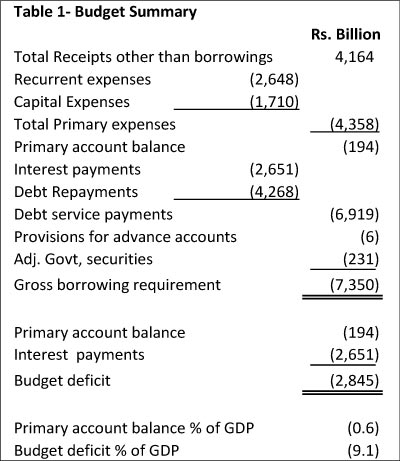
When reviewing the summary of the Budget it is evident that the Budget was prepared in line with the indicators of the IMF. The figures in Table 1 were extracted from the Annexures I and II of the Budget speech. There are slight differences between the figures in those annexures. 

According to Table 1 total income is Rs. 4,164 billion and total expenditure other than interest payments is Rs. 4,358 billion. The difference between these two figures, which is the Primary Account deficit is Rs. 194 billion. According to the conditions agreed with the IMF in the year 2024 the Primary Account balance should be a positive one and it should be 0.8% of the GDP. However, the figure indicated is a negative balance of 0.6% of GDP. In the Annexures to the Budget speech, the amount of Rs. 450 billion allocated for recapitalisation of the banks, which was included in the capital expenditure, was shown separately. This indication was neither to the Parliament nor to the public. It is to the IMF. When this Rs. 450 billion is removed from the capital expenditure the Primary Balance will be a positive one and it is 0.8% of the GDP which is the expectation of the IMF.

Recapitalisation of State banks was included in the interim  presented by Ranil Wickremesinghe for the year 2022 and it was included in the conditions agreed with the IMF. In the interim Budget it was proposed that 20% of the shares of state banks should be sold to the depositors and to the staff of the banks. According to this Budget it appears to be that Rs. 450 billion will be used to recapitalise the banks and then 20% of the shares will be privatised, which is not clear. The shares of the commercial banks the Government acquired through EPF, ETF and the Insurance Corporation could be sold in order to recapitalise a portion of the state banks. Or else the shares of the State banks could be listed in the stock exchange and 20% of the shares could be sold. Ideally it should be more than 20%. By this way in addition to the generation of quick cashflows to the Government coffers the entire banking sector could be made more competitive by injecting fresh blood to the two large State banks with a significant market share. 


Destructive thinking

The Government delays this process to be in line with the destructive thinking of the country that assets of the State should be kept intact whether those assets are used productively or not. This destructive thinking does not understand the desire of the politicians to spread their personal power to the State sector entities. What this destructive thinking does is allowing the politicians to engage in wrong doings and then put the fault of the corrupt Government service and the corrupt society on the politicians.

State banks have fallen into this plight mainly due to the unsustainable loans given to the loss-making Government institutions such as CEB, CPC and SriLankan Airlines. The President has clearly stated that in his Budget speech. The reason for the losses of CEB and CPC in addition to their inefficiencies was that they have to sell their products to the public lower than their production costs in order to satisfy the political aspirations of the successive Governments. This situation is being reversed now. Mahinda Rajapaksa is solely responsible for the losses of SriLankan Airlines since he reacquired the company of which a large portion was privatised including the management, and which was running profitably, to satisfy his personal ambitions. Therefore, to that extent he is an economic assassin.  

Ranil Wickremesinghe no sooner became the Prime Minister in 2022, addressed the nation and said that SriLankan Airlines should be restructured. He and his appointed commission for this purpose move forward very slowly. In the year 2022 the 13 loss making Government entities made a loss of Rs. 1,029 billion. Out of that Rs. 1,023 billion loss was made by SriLankan Airlines, CEB and CPC which was 99.3% of the total loss.

According to other data in Table 1, the budget deficit is Rs. 2,845 billion. The budget deficit is the residual balance after deducting all the expenses including interest expenses from the total revenue. This is a deficit and is 9.1% of the GDP. If the amount of Rs. 450 billion which the recapitalisation of the banks is removed from the expenses, the budget deficit would be 7.6% of the GDP. This value for the year 2022 was 10.2% and the revised figure in 2023 was 8.5%. Hence the deficit is getting reduced.

The need to borrow to finance the budget is Rs. 7,350 billion. Out of that Rs. 6,919 which is 94% of the money to be borrowed will be spent on repayment of capital and interest of the borrowed money. Therefore, views against continuous borrowing are not substantiated.

Thus, on the paper the Budget is fine, and it is in line with the agreed conditions with the IMF. However, there are several issues. 

The tax revenue based on the conditions agreed with the IMF should be Rs. 2,949 billion which is 9.7% of GDP. According to the revised estimates of 2023, it is Rs. 2,596. There is a deficit of Rs. 353 of the tax revenue. In 2024 there was no agreement with the IMF to increase the VAT rate. What was agreed was to expand the VAT base and remove SVAT. Those who supply goods and services to the exporters are not liable to pay VAT on the said transactions, this system is called SVAT. Based on the request of the exporters the Government decided not to remove SVAT. Therefore, the Government has increased VAT rate by 3% from 15% to 18% with effect from 1 January 2024. 

Based on the Government revenue estimates, tax income on VAT in 2024 would be Rs. 2,235 billion. The corresponding figure in 2023 was Rs. 1,376 billion. Accordingly, there will be an additional income of Rs. 859 in 2024. Collecting tax in this manner is an easy task compared to chasing behind the persons who are liable but do not pay taxes. The sum of the expenditure for the 50 tax proposals made by the President is Rs. 212 billion. Out of that the expenditure for the salary increase of the Government servants is Rs. 133 billion. Aswesuma benefit including the benefits to elderly and differently able persons is Rs. 205 billion. The Government estimates that all these expenses could be recovered from the increase of VAT rate.

The more difficult task of expanding the tax base should be addressed even with allocating more personnel out of the excess Government employees. In 2024 the portion of direct taxes out of the total tax income is 28%. In 2023 revised estimates it is 33% and in 2022 it was 30%. This percentage should be increased not in principle but practically. 

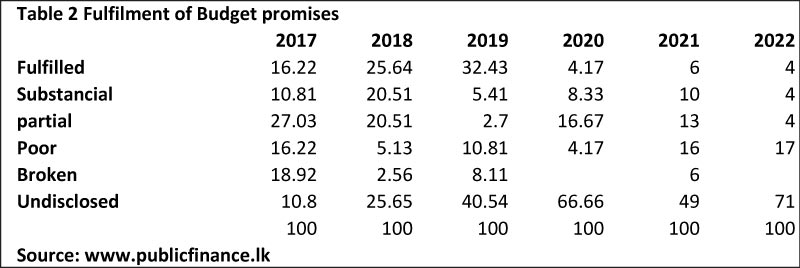
The provisions were allocated for 50 Budget proposals in 2024. In Table 2, summarised information is given in respect of the implementation of Budget proposals as percentages based on research done by Verite Research (www.publicfinance.lk). Progress of implementation of the Budget proposals from 2017 to 2022 were identified in six categories namely, fulfilled (progress on the promise is over 80% of the target), substantial (progress on the promise is between 66% to 80% of the target), partial (promise is between 33% to 66% of the target), poor (progress on the promise is less than 33% of the target), broken. No progress has been made on the promise or the promise has been removed from the action plan), and undisclosed (No information is available to determine the status of the promise or available information is insufficient/unusable). In mid-year 2023 for 2023 the progress of the Budget proposals were 8%- progressing, 24% -lagging and 68%- undisclosed.

It is the duty of the Parliament which is responsible for public finance to overcome this situation.


Revenue targets are unrealistic

There were comments that the revenue targets are unrealistic which is true. In 2023 in the revised estimates compared to the initial figures in 2023, there was a shortfall of Revenue of 16.7%. Estimated VAT revenue came down by 21.95% and income tax revenue came down by 5.26%. To compensate for this, the Government revised the expenditure estimates. The worst hit was capital expenditure of which the reduction rate was 35.9%. Interest expenses were kept intact. The reduction of salaries and wages was 1.6%.

Therefore, what would happen is when the revenue drops, these fairytale Budget proposals such as Anuradhapura Maha Vihara University construction for which Rs. 400 million was allocated will go out of the window and Verite Research could identify those as undisclosed. There are more than 20 proposals for which there were no financial allocations. Hence those are already on the undisclosed list. This time in addition to interest expenses, the Government will not be able to touch the increase allocated to salaries which is Rs. 133 million. What is disturbing is the possible reduction of the allocation to the capital expenditure, in case of a revenue drop.

In summary, there is no evidence that this is an election budget. This time unlike in previous election years, Government has not borrowed money to give benefits to the people such as the salary increase. That was done by increasing the VAT which is collected from the people. Therefore, if this is aimed at an election the Government will have to answer the people for the increased cost of living at an election.

The President said that he was yet to decide whether he will re-contest presidency since he is fully concentrated on rebuilding the economy. If he decides that he will not contest the presidency the time left is more than enough to make the structural changes to the economy which are lagging. These structural changes are privatising the deserved public enterprises in a transparent way, making a revenue authority, digitalising Government activities for which a Budget allocation is there, introduce KPIs to public sector and stop promotions based on seniority as Sarath Fonseka did at the war. Create necessary conditions to attract FDI, expedite making EPZs as promised, and enter FTAs with important countries with favourable terms. No populist President whether left or right could do these reforms. If he could do these things he will be remembered forever.

(Published in Daily FT on November 23, 2023)

මෙය මැතිවරණ අයවැයක්ද?

 හර්ෂ ගුණසේන –

හර්ෂ ගුණසේන

මෙම අයවැය සම්බන්ධව බොහෝ විවේචන එල්ල වෙමින් තිබේ. මෙය මැතිවරණ අයවැයක් බවද දිගින් දිගටම කෙරෙන ණය ගැනීම් වලින් සමන්විත අයවැයක් බවද මෙහි ඇත්තේ විකිණීම, බදු ගැසීම සහ ණය  ගැනීම  පමණක් බවද ප්‍රකාශ වේ. අයවැයේ සාරාංශය ගෙන බලන විට පෙනීයන්නේ මෙය ජාත්‍යන්තර මූල්‍ය අරමුදලේ නිර්ණායක අනුව සකසන ලද අයවැයක් බවය. මෙහි දක්වා ඇති පළමුවන වගුවේ තොරතුරු ගත්තේ අයවැය කතාවේ ඇමුණුම I සහ ඇමුණුම II හි ඇති තොරතුරු අනුවය. මෙම සංඛ්‍යා වල සුළු පරස්පරතාවක් තිබේ. 

වගුව අනුව සමස්ත ආදායම රු. බිලියන 4,164ක් වන අතර පොලී ගෙවීම් හැර මුළු වියදම රු. බිලියන  4,358කි. මෙම සංඛ්‍යා දෙකෙහි වෙනස හෙවත් ප්‍රාථමික ගිණුමේ හිඟ  ශේෂය රු. බිලියන 194 කි. මුල්‍ය අරමුදල සමඟ එකඟ වූ කොන්දේසි අනුව වර්ෂ 2024 දී ප්‍රාථමික ගිණුමේ ශේෂය දළ දේශීය නිෂ්පාදිතයෙන් 0.8%ක අතිරික්තයක් විය යුතුය. එනමුත් මෙම අගය ද.දේ.නි. යෙන් 0.6%ක හිඟයකි. බැංකු ප්‍රති ප්‍රාග්ධනීකරණය සඳහා වැයවෙතැයි අපේක්ෂා කරන සහ ප්‍රාග්ධන වියදම් වල ඇතුලත් කර ඇති රු. බිලියන 450 අයවැය කථාවේ ඇමුණුම් වල සෑම විටම වෙනම ද දක්වා තිබේ. මෙම වෙනම දැක්වීමේ ඉලක්කය මෙරට ජනතාව හෝ පාර්ලිමේන්තුව හෝ නොවේ. ජාත්‍යන්තර මූල්‍ය අරමුදලයි. මෙම රු. බිලියන 450 ඉවත් කළ විට ප්‍රාථමික ගිණුමේ ශේෂය ද. දේ. නි. යෙන් 0.8%ක් වන අතර එය මූල්‍ය අරමුදලේ ඉලක්කය සමඟ සමපාත වේ. 

රාජ්‍ය බැංකු ප්‍රති ප්‍රාග්ධනීකරණය රනිල් වික්‍රමසිංහ මෙවර මුදල් ඇමති වී ඉදිරිපත් කළ 2022 අතුරු අයවැයේ ද සඳහන් විය. එය මූල්‍ය අරමුදල සමඟ එකඟවූ  කොන්දේසි වලද ඇතුලත්ය. ඔහු විසින් අතුරු අයවැයෙන් යෝජනා කළේ රාජ්‍ය බැංකු වල කොටස් වලින් 20%ක් බැංකුවල සේවකයන්ට සහ තැන්පත්කරුවන්ට ලබා දෙන බවයි. රාජ්‍ය මුදල් වලින් කොටසක් ප්‍රති ප්‍රාග්ධනීකරණයට යොදවා ඉන් පසුව බැංකු වල කොටස් වලින් 20%ක් පුද්ගලීකරණය කිරීමට බලාපොරොත්තු වන බව පෙනෙන්නට තිබේ. එය පැහැදිලි නැත. රක්ෂණ සංස්ථාව සහ අර්ථසාධක අරමුදල වැනි ආයතන හරහා රජය විසින් සතුකර ගෙන තිබෙන වාණිජ බැංකු කොටස් විකිණීමෙන් ලැබෙන මුදලින් රාජ්‍ය බැංකු ප්‍රති ප්‍රාග්ධනීකරණයට දායක විය හැක. එසේ නැතිනම් මෙම රාජ්‍ය බැංකු කොටස් වෙළෙඳ පොළේ ලැයිස්තු ගත කර ඒවායේ කොටස් වලින් 20% කොටස් වෙළෙඳ පොළේ විකිණිය හැක. 

 ආණ්ඩුව එසේ කිරීම පමා කරන්නේ මෙරට ඇති පසුගාමී අමනොඥ ජනතා චින්තනය වන ඊනියා රාජ්‍ය සම්පත් රජය වෙතම තබාගෙන සිටීමට අනුගත වීමක් ලෙසය. මෙම පසුගාමී ජනතා චින්තනය මෙම රාජ්‍ය සම්පත් කෙරෙහි සිය බලය පැතිරවීමට දේශපාලනඥයන්ගේ ඇති කැමැත්ත වටහා ගෙන නොමැත. මෙම ඊනියා ජනතා චින්තනය විසින් කරනු ලබන්නේ දේශපාලනඥයන්ට සොරකම් කිරීමට අවස්ථා විවර කරවා දූෂිත වී ඇති රාජ්‍ය සේවයේද සමස්ත සමාජයේද වරද නැවත දේශපාලනඥයන් පිට පැටවීමයි.

එයට අමතරව රාජ්‍ය බැංකු වලට මේ තත්ත්වයට වැටීමට සිදුවූයේ ප්‍රධාන වශයෙන්ම ශ්‍රී ලංකා ගුවන් සමාගම, විදුලි බල මණ්ඩලය සහ ඛනිජ තෙල් නීතිගත සංස්ථාව වැනි ආයතන වල මුදල් ණයට දීමට සිදුවීම නිසාය. ජනාධිපතිවරයා ඒ බව පැහැදිලිව අයවැය කථාවේ සඳහන් කර ඇත. විදුලි බල මණ්ඩලය සහ ඛනිජ තෙල් නීතිගත සංස්ථාව පාඩු ලැබීමට ප්‍රධාන හේතුව වූයේ අකාර්යක්ෂමතාවන්ට අමතරව ඒවායේ නිෂ්පාදන, නිෂ්පාදන මිලට වඩා අඩුවෙන් ජනතාවට විකිනීමට සිදුවූ නිසාය. ගුවන්  සමාගමේ පාඩු වලට තනිකරම වගකිව යුත්තේ මහින්ද රාජපක්ෂයි.  මක්නිසාද යත් පුද්ගලීකරණය කර තිබූ ගුවන් සමාගම පුද්ගලික අභිමතාර්ථයන් සඳහා නැවත රජයට පවරා ගැනීමට කටයුතු කළ බැවිනි. ඒ අර්ථයෙන් ඔහු ආර්ථික ඝාතකයෙකි. රනිල් වික්‍රමසිංහද මෙවර අගමැතිවූ සැණින් ජාතිය අමතා කථා කරමින් ගුවන් සමාගම ප්‍රතිව්‍යුහගත කරන බව කියා සිටියේය. ඔහු සහ මේ සඳහා ඔහු විසින් පත් කල කොමිසම තවමත් මන්ද ගාමී ලෙස ඉදිරියට යති. වර්ෂ 2022දී අලාභ ලැබූ රාජ්‍ය ව්‍යවසාය 13 සමස්ත අලාභය රු. බිලියන 1029කි. ඉන් බිලියන 1023ක් එනම් 99.3%ක් විදුලි බල මණ්ඩලයේ , ඛනිජ තෙල් සංස්ථාවේ  සහ ශ්‍රී ලංකා ගුවන් සමාගමේ අලාභය. 

වගුවේ ඇති අනෙක් කරුණු වලට අනුව අයවැය හිඟය රු. බිලියන 2,845කි. අයවැය හිඟය යනු රජයේ මුළු අදායමෙන් පොලී ගෙවීම ඇතුළුව මුළු වියදම අඩු කිරීමෙන් ලැබෙන ශේෂයයි. මෙය ද.දේ.නි. යෙන් 9.1 ක හිඟයකි. ඉහත දැක්වූ බැංකු  ප්‍රති ප්‍රාග්ධනීකරණය ඉවත් කළ හොත් අයවැය හිඟය ද.දේ.නි.යෙන් 7.6% කි, මෙම අගය වර්ෂ 2023 සංශෝධිත ඇස්තමේන්තු අනුව 8.5%කි. වර්ෂ 2022 දී 10.2%කි. මේඅනුව අයවැය හිඟය අනුක්‍රමයෙන් අඩුවෙමින් යයි. 

අයවැයේ මුළු ණය ගැනීමේ අවශ්‍යතාව රු. බිලියන 7,350කි. එයින් රු. බිලියන 6,919ක් එනම් ගන්නා ණයෙන් 94%ක් වැය වන්නේ   ගත්  ණය වල පොලී සහ ණය වාරික ගෙවීමටයි. එබැවින් මේ ණය ගැනීමට විරුද්ධව මත පල කරන්නන්ගේ මත හිස් ප්‍රලාප බවට පත්වේ.

එබැවින් අයවැය සංඛ්‍යා ලේඛන අනුව මූල්‍ය අරමුදල සමඟ එකඟ වූ කොන්දේසි වලට අනුගතය.ප්‍රශ්ණය ඇත්තේ එතැන නොවේ. 

මූල්‍ය අරමුදල සමඟ එකඟ වූ කොන්දේසි අනුව වර්ෂ 2023දී බදු ආදායම රු. බිලියන 2,949ක් විය යුතුය. වර්ෂ 2023 සංශෝධිත ඇස්තමේන්තු අනුව එම ආදායම රු. බිලියන 2,596කි. මේ අනුව 2023 වසරේ බදු ආදායමේ රු. බිලියන 353ක හිඟයක් පවතී. මූල්‍ය අරමුදල සමඟ එකඟ වූ කොන්දේසි අනුව 2024දී VAT බද්ද වැඩි කිරීමක් නැත. එකඟ වී තිබුණේ VAT බද්ද පුළුල් කිරීම සහ SVAT ක්‍රමය නැති කිරීමයි. SVAT යනු  අපනයන ව්‍යාපාරිකයන්ට භාණ්ඩ සපයන ව්‍යාපාරිකයන් එම ගනුදෙනු සඳහා VAT බද්දෙන් නිදහස් කිරීමයි. අපනයන ව්‍යාපාරිකයන්ගේ ඉල්ලීම මත ආණ්ඩුව ලබන වසරේදී SVAT ඉවත් නොකරනු ඇත. මේ අනුව බදු ආදායම් වැඩි කිරීම සඳහා ආණ්ඩුව විසින් VAT බද්ද ලබන ජනවාරි සිට 15% සිට 18% දක්වා 3%කින් වැඩිකර ඇත.   

ආණ්ඩුවේ අයවැය ඇස්තමේන්තු අනුව VATබද්දෙන් වර්ෂ 2024 ලැබෙන ආදායම රු. බිලියන 2,235කි. වර්ෂ 2023 සංශෝධිත ඇස්තමේන්තු අනුව මෙම මුදල රු. බිලියන 1,376කි. මේ අනුව 2024 දී රු. බිලියන 859 ක අමතර මුදලක් VAT වෙනුවෙන් ලැබේ. ආදායම් බදු වෙනුවෙන් නොගෙවන්නන් හඹා යාමටත් අමතර බදු ලිපිගොනු විවෘත කිරීමටත් වඩා මෙය පහසු කටයුත්තකි. ජනාධිපති වරයා විසින් ඉදිරිපත් කරන ලද අයවැය යෝජනා 50 ට වියදම් වන මුළු මුදල රු. බිලියන 212කි. රජයේ සේවකයන්ගේ පඩි වැඩිවීමට වියදම වන්නේ රු. බිලියන 133 කි. වෙනත් වැඩිහිටි, අබාධිත සහ වකුගඩු රෝගීන්ට ගෙවන මුදල ඇතුළු අස්වැසුම සඳහා තුන් ගුණයකින් වැඩිවූ මුදල රු. බිලියන 205 කි. VAT බද්ද වැඩි කිරීමෙන් මේ සියල්ල පියවා ගත හැකි මුදලක් ලැබෙතැයි රජය ඇස්තමේන්තු කරයි. 

වඩාත් අපහසු බදු පදනම පුළුල් කිරීමේ කාර්ය භාරයට අතිරික්ත රජයේ සේවකයන් යොදවා හෝ අත ගැසිය යුතුය. වර්ෂ 2024 ඇස්තමේන්තු අනුව මුළු බදු ආදායමෙන් ඍජු බදු හෙවත් ආදායම් බදු වලින් ලැබෙන ප්‍රතිශතය 28% කි. වර්ෂ 2023 සංශෝධිත ඇස්තමේන්තු අනුව මෙය 33% කි. වර්ෂ 2022 දී මෙය 30%කි. මෙම ප්‍රතිශතය ප්‍රතිපත්තිමය වශයෙන් පමණක් නොව ප්‍රයෝගික වශයෙන්ද වැඩි කිරීම බදු ආදායම වැඩි කිරීම සඳහා වන  රජයේ ක්‍රියා මාර්ගය විය යුතුය.

මෙවර අයවැය යෝජනා 50 කට මුදල් වෙන් කර තිබේ. වෙරිටේ රිසර්ච් ආයතනය විසින් කරන ලද විමර්ශනයකින් අයවැය යෝජනා ක්‍රියාත්මක කිරීම සම්බන්ධ තොරතුරු ප්‍රතිශතයක් ලෙස දෙවන වගුවේ දැක්වේ. (www.publicfinance.lk) වර්ෂ 2017 සිට 2022 දක්වා ඉදිරිපත් කල අයවැය යෝජනා වලින් ඉටු කරන ලද (කාර්ය භාරයෙන් 80% කට වැඩි ප්‍රමාණයක් අවසන්), බොහෝ දුරට ඉටු කරන ලද (කාර්ය භාරයෙන් 66%-80% ප්‍රමාණයක් අවසන්), තරමක් දුරට ඉටු කරන ලද (කාර්ය භාරයෙන් 33%-66% ප්‍රමාණයක් අවසන්), සුළු වශයෙන් ඉටු කරන ලද (කාර්ය භාරයෙන් 33% කට අඩු ප්‍රමාණයක් අවසන්), ඉටු නොකරන ලද (කිසිවක් කර නොමැති) සහ දැන ගැනීමට නොමැති (තොරතුරු කිසිවක් නැත) යනුවෙන් දක්වා ඇත. මෙම තොරතුරු වර්ෂ 2023 ජුනි වන විට එම වර්ෂය සඳහා 8% ක් ඉටුවෙමින් තිබෙන, 24% ක් ඉටුවීම ප්‍රමාද වන සහ 68% ක් දැන ගැනීමට නොමැති වශයෙන් වර්ග කර ඇත.

මෙම තත්ත්වය සමතික්‍රමණය කිරීම සඳහා රාජ්‍ය මුදල් පාලන බලය හිමි පාර්ලිමේන්තුව ක්‍රියාත්මක විය යුතු යයි සිතමි.

අයවැයේ ආදායම් ඉලක්ක සාධනීය නොවන බවට මත පලවී තිබේ. ෆිච් රේටින්ග්ස් ආයතනය දැනටමත් ඒ බව නිවේදනය කර තිබේ. මෙය ඇත්තකි. වර්ෂ 2023 සශෝධිත ඇස්තමේන්තු මුල් ඇස්තමේන්තු සමඟ සංසන්දනය කල විට ආදායමේ 16.7%ක අඩුවීමක් තිබේ. VATආදායම  21.95%ක අඩුවීමක් පෙන්නුම් කරන අතර ආදායම් බදු 5.26% ක අඩුවක් පෙන්නුම් කරයි. මෙම අඩුවීම් සමනය කිරීම සඳහා ආණ්ඩුව වියදම් ඇස්තමේන්තු අඩු කර ඇත. බරපතල අඩුවීමක් පෙන්නුම් කරන්නේ ප්‍රාග්ධන වියදම්ය. එය 35.9%කි. පොලි ගෙවීම් අඩු කල නොහැක. වැටුප් හා වේතන වියදම් අඩුවී ඇත්තේ 1.6% කිනි. 

එබැවින් සිදුවිය හැක්කේ රු. මිලියන 400ක් වෙන්කර ඇති අනුරාධපුර මහා විහාර විශ්ව විද්‍යාලය වැනි සුරංගනා යෝජනා ආදායම අඩුවන විට පෑල දොරෙන් විසිවී යාමයි. වෙරිටේ රිසර්ච් ආයතනයට මෙය දැනගැනීමට නොමැති වශයෙන් වර්ග කල හැක. 20 කට වැඩි අයවැය යෝජනා වලට මුදල් ප්‍රතිපාදන නැත. ඒවා කෙලින්ම දැනගැනීමට නොමැති වශයෙන් වර්ග කල හැක. ආණ්ඩුවට පඩි වැඩිවීම එලෙසින්ම ක්‍රියාත්මක කිරීමට සිදුවනු ඇත. ප්‍රශ්නය වන්නේ ප්‍රාග්ධන වියදම් අඩුවීමට ඇති ප්‍රවනතාවයි.

සමස්තයක් වශයෙන් අයවැය මැතිවරණයක් ඉලක්ක කරගත් බවට සාධක නොමැත. මක්නිසාද යත් පෙර මැතිවරණ වර්ෂ වල මෙන් ජනතාවට සහන දීම සඳහා මුදල් ණයට ගෙන නොමැති අතර සහන දී ඇත්තේ ජනතාවගෙන්ම අය කර ගන්නා VAT බද්ද මගින් වීමයි. මෙය මැතිවරණයක් ඉලක්ක කර ගත්තේ නම් රජයට මැතිවරණයේදී වැඩි කල VAT බද්ද වෙනුවෙන් ජනතාවට උත්තර බැඳීමට සිදුවනු ඇත.

ජනාධිපතිවරයා තම කාලය සම්පුර්ණයෙන් රටේ ආර්ථික වර්ධනය සඳහා යොදවන බැවින් ඊලග ජනාධිපතිවරණය සඳහා ඉදිරිපත් වන්නේද යන්න ගැන තවම තීරණයක් ගෙන නොමැති බව පසුගියදා ප්‍රකාශ කර  තිබුණි. ඔහු ජනාධිපතිවරණයට ඉදිරිපත් නොවන්නේ නම් බියක් සැකක් නැතිව රටට අවශ්‍ය ආර්ථික ප්‍රතිසංස්කරණ ඉතිරිවී ඇති කාලය තුල සිදු කළ හැක. මෙම ප්‍රතිසංස්කරණ වන්නේ පුද්ගලීකරණය කළ යුතු රාජ්‍ය ව්‍යවසාය විනිවිද භාවයකින් යුතුව පුද්ගලීකරණය කිරීම, රාජ්‍ය ආදායම් අධිකාරියක් ඇතිකිරීම, රාජ්‍ය කටයුතු ඩිජිටලීකරණය කිරීම(මෙයට අයවැය ප්‍රතිපාදන ඇත.), කාර්ය සාධක නිර්ණායක රජයේ සේවකයන්ට හඳුන්වා දීම, සරත් පොන්සේකා යුද සමයේ කළාක් මෙන් උසස්වීම් ජ්‍යෙෂ්ටතාව මත දීම නැවැත්වීම, විදේශ ආයෝජන පැමිණීමට අවශ්‍ය වාතාවරණය සැකසීම, පොරොන්දු වූ අපනයන කලාප ඇතිකිරීම ඉක්මන් කිරීම, සහ සුදුසු රටවල් සමඟ වාසි දායක කොන්දේසි යටතේ ඉක්මනින් ද්වි පාර්ශ්වික වෙළෙඳ ගිවිසුම් වලට එළඹීම වේ. මේ රටේ දක්ෂිණාංශික හෝ වාමාංශික හෝ ජනප්‍රිය ජනාධිපතිවරයකුට මෙම යෝජනා ක්‍රියාත්මක කළ නොහැක. මෙම යෝජනා ක්‍රියාත්මක කරන්නේ නම් ඒවායේ ප්‍රතිඵල ලැබෙන විට රට වැසියන්ගේ සිත් වල සදාකල් ජීවත්වීමට ඔහුට හැකිවනු ඇත.

(published in Colombo Telegraph on November 16, 2023 and in Samabima supplement in Anidda newspaper.)

Print Friendly, PDF & Email

Friday, November 10, 2023

International Accounting Day and the accounting profession in Sri Lanka

 Today, November 10 is International Accounting Day that  commemorates the day in 1494, when Luca Bartolomeo de Pacioli, a Venitian mathematician, known as the Father of Accounting, published his book, Summa de arithmetica, geometria, proportioni et proportionalita the English translation of which is, ‘Everything about arithmetic, geometry and proportion’.


Evidence of Accounting in ancient rock scripts

Although double entry bookkeeping was introduced by Luca Pacioli, the function of accounting is an age-old exercise in any civilized society. In Sri Lanka also there is evidence of the existence of accounting depicted in various rock scripts. One such rock script was the Mihintale Tablet erected by King Mahinda IV in tenth century AD. There were two tablets and the text dealt with the duties of the officers and the monks of the Sandagiri Monastery. The text goes on as follows from the lines 53 to 58 in the first tablet.

“Except the portion granted for their livelihood,  the balance income tax, transacted  with the concurrence of the officials,  collected  from lands belonging to this monastery  shall be entered in the daily primary register. Whatever is spent daily on the maintenance of the Maha-Pavatta for the wage earners, and on the renovation of works shall be entered in the daily primary register.  That should be signed by the chief officers and by the people authorised to sign. The daily primary registers should be placed in a casket under lock and key. A monthly statement should be prepared on the daily registers. From the twelve statements of accounts prepared for the year, an annual account statement should be compiled, and read out at a meeting of the monks and recorded in the secretarial book.  The officers who do not follow these rules shall be made to pay gedad fines and be dismissed from service” (Translated from the Vimarsanathmaka Sinhala Shilalipi Mala by Ven. Makuruppe Dhammananda).

At that time, they had day books, monthly accounts and annual meetings at which the annual accounts were tabled and discussed. Accounting is the language of Business. Let alone monthly accounts, quite a number of small businesses today do not keep proper accounting records.

Eventually, in 1854, the Institution of Accountants in Glasgow became the first official organisation representing and regulating the accounting profession. The International Accounting Standards Committee (IASC) was formed in June 1973 in London through an agreement made by professional accountancy bodies from Australia, Canada, France, Germany, Japan, Mexico, the Netherlands, the United Kingdom and Ireland, and the United States of America. In April 2001, the International Accounting Standards Board (IASB) was formed replacing the IASC. 

The International Federation of Accountants (IFAC) was founded in October 1977, in Munich, Germany, at the 11th World Congress of Accountants.  The IFAC comprises 180 professional organisations in 135 jurisdictions. 


Accounting bodies in Sri Lanka

In Sri Lanka we have three accounting bodies. The Institute of Chartered Accountants of Sri Lanka (CA Sri Lanka), the premier accounting body in the country, was founded in 1959 by Parliamentary Act No. 23 of 1959. In terms of the Sri Lanka Accounting & Auditing Standards Act No.15 of 1995, CA Sri Lanka is authorised to set the Accounting and Auditing Standards in the country. Sri Lanka Accounting Standards are based on the International Financial Reporting Standards issued by the International Accounting Standards Board (IASB). Sri Lanka Auditing Standards are based on the International Standards on Auditing (ISA) published by the International Auditing Practices Committee (IAPC) of the IFAC. 

The Institute of Certified Management Accountants of Sri Lanka (CMA) was established by Parliamentary Act No 23 of 2009.  It was initially established in June 2000 as the Society of Management Accountants in Sri Lanka. 

The Association of Accounting Technicians of Sri Lanka (AAT Sri Lanka) was formed in 1987 and registered under the Companies Act No 17 of 1982 and re-registered under the new Companies Act No 7 of 2007, as a company limited by guarantee.

The Association of Public Finance Accountants of Sri Lanka (APFASL) was established in January 2012 as the Public Sector Wing of CA Sri Lanka, with the primary objective of enhancing professional skills and expertise of public sector accountants, auditors and assessors in order to improve financial management practices in the country.

Public Accountants (Auditors who are  hartered Accountants) unlike in other professions where professional responsibility lies with the client, are responsible for the public at large who rely on the Financial Statements audited by them. Therefore, integrity is an essential part of their profession. Besides the Public Accountants, Chartered Accountants, Management Accountants, Public Sector Accountants and Accountant Technicians who render their services in private or public organisations too should adhere to the best levels of integrity.

Sri Lanka is in a financial crisis today and a country that has declared bankruptcy, acknowledging that it is unable to pay its sovereign debts. We are currently under the IMF program of assistance. We know that Sri Lanka is falling behind in its commitments given to the IMF and the second instalment of the loan is delayed. Meanwhile, the IMF issued a report at the end of September emphasising 16 points associated mainly with corruption and governance issues. While acknowledging the fact that accountants cannot contribute to solve all these issues, the accountants can contribute immensely to eradicate corruption in the country.

Therefore, my first suggestion to the three accounting bodies of Sri Lanka and to the universities that teach accounting, is to find out a way of inculcating integrity in the accounting students as it is crucial not only to the profession but also to the country. The process should be in the curricula and introduced as a way of life.

Sri Lanka in contrast to western cultures is not a rules-based society. Things are done based on social connections. Therefore, society is vulnerable to move towards corruption and bribery. I do not suggest that corruption is not found in western cultures. The biggest white-collar scandals happened in the West but their vulnerability to corruption as a society is low. Hence, we have to make extra effort to combat this vulnerability.

All three accounting bodies of Sri Lanka are members of the Confederation of Asian and Pacific Accountants (CAPA); and CA Sri Lanka and CMA are members of South Asian Federation of Accountants (SAFA). Sri Lanka has produced two past presidents of CAPA, Ranel T. Wijesinha and Sujeewa Mudalige and six past presidents of SAFA, Lakshman R. Watawala, N.A.L. Cabraal, Lal Nanayakkara, Indrajith Fernando, Arjuna Herath and H.M.Hennayake Bandara. The current Vice President of CA Sri Lanka Heshana Kuruppu is the current Vice President of SAFA as well. 

In other countries there are accounting associations.  The American Accounting Association (AAA) is an organisation that supports accounting education, research, and practice. It is the primary professional association for accounting academics in the United States. The Indian Accounting Association (IAA) is an interface between academics, professionals and practitioners from various universities, businesses, industry and government. The main function of IAA is to promote and disseminate knowledge of accounting and related subjects in India and abroad.

Both CA Sri Lanka and CMA have signed MOUs with the accounting departments of various Sri Lankan universities. It is the time now to take a step forward and establish an association comprising professional accounting bodies and accounting departments of the Sri Lankan universities. This is a necessary combination considering the present status of Sri Lanka.


 Accounting Standards

For instance, CA Sri Lanka is setting the Accounting Standards. In addition to the main set of standards they have prepared a set for SMEs and another for micro entities. The country needs to carry out extensive research by the academics, to ascertain whether businesses apply these standards. The feedback would be helpful for standard setters. The intention of both, professionals and academics should be to promote the application of accounting knowledge in the businesses. In order to revive our collapsed economy, the contribution of the SMEs is essential not only in the Western Province but throughout the country. Most of these entities are collapsing due to lack of financial literacy.

Hence, my second suggestion to the accounting bodies and the academic institutions in accounting is to get together in the form of an association and make a combined effort to promote accounting knowledge and financial literacy in the country.

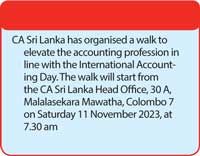
CA Sri Lanka has organised a walk to elevate the accounting profession in line with the International Accounting Day. The walk will start from the CA Sri Lanka Head Office, 30 A, Malalasekara Mawatha, Colombo 7 on Saturday 11 November 2023, at 7.30 am. 

https://www.ft.lk/columns/International-Accounting-Day-and-the-accounting-profession-in-Sri-Lanka/4-755027

Published in DailyFT on 10 November 2023