Sunday, June 6, 2021

රාජ්‍ය ණය : ජපානය සහ ග්‍රීසිය අතර ඇති වෙනස සහ ශ්‍රී ලංකාවේ ස්ථාන ගත වීම

 government debt in sri lanka harsha gunasena

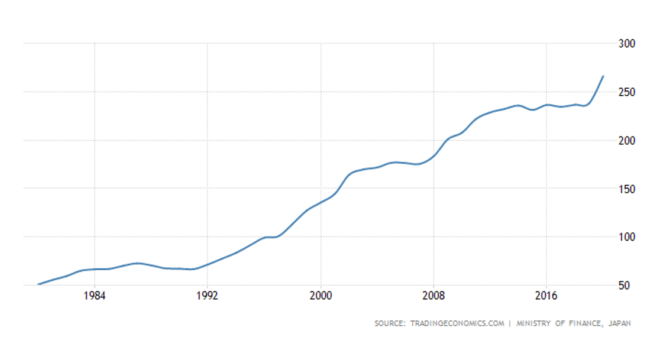
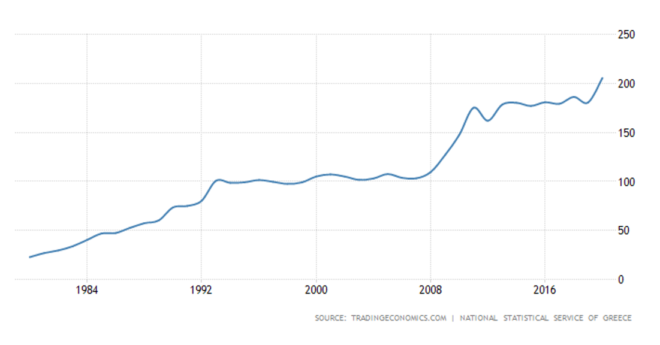
ඇමෙරිකා එක්සත් ජනපදය සහ චීනය හැරුණු කොට ලොව බලවත්ම ආර්ථිකය ජපානය යි. එමෙන්ම වර්ෂ 2020 සඳහා රාජ්‍ය ණය දල දේශීය නිෂ්පාදිතයේ ප්‍රතිශතයක් ලෙස ගත හොත් ලෝකයේ ඉහළින්ම සිටින්නේ වෙනිසියුලාව වන අතර දෙවනියට සිටින්නේ ජපානයයි. එම ප්‍රතිශතය 266% කි. තුන්වෙනුව සිටින්නේ සුඩානය වන අතර හතරවෙනුව  සිටින්නේ ග්‍රීසිය යි. එරටට  අදාල ප්‍රතිශතය 206% කි. ශ්‍රී ලංකාව 23 වන ස්ථානයේ සිටියි. අදාල ප්‍රතිශතය 101% කි. ජපානය ශ්‍රී ලංකාවටත්  සංවර්ධන ණය දෙන දියුණු රාජ්‍යයකි.

ග්‍රීසියද සංවර්ධනය වූ රටකි. එහි එක පුද්ගල අදායම (රටේ සමස්ත නිෂ්පාදනය රටේ ජනගහනයෙන් බෙදු විට ලැබෙන අගය) ලෝක බැංකු වාර්තා අනුව වර්ෂ 2019 දී ඇමරිකන් ඩොලර් 19,583 කි. ශ්‍රී ලංකාවේ අදාල අගය ඩොලර් 3,853 වන අතර ජපානයේ එය ඩොලර් 40,247 කි. ග්‍රීසිය ජාත්‍යන්තර මුල්‍ය අරමුදලෙන් ලබාගත් ණය ගෙවීමට නොහැකිවූ ප්‍රථම සංවර්ධිත රාජ්‍යයයි. මෙම ණය තත්ත්වයෙන් ගොඩ ඒම සඳහා ග්‍රීසියට ජාත්‍යන්තර මුල්‍ය අරමුදල මතු නොව යුරෝපා සංගමයත් ආධාර කළේය. ග්‍රීසිය යුරෝපා සංගමයේ සාමාජික රටකි.

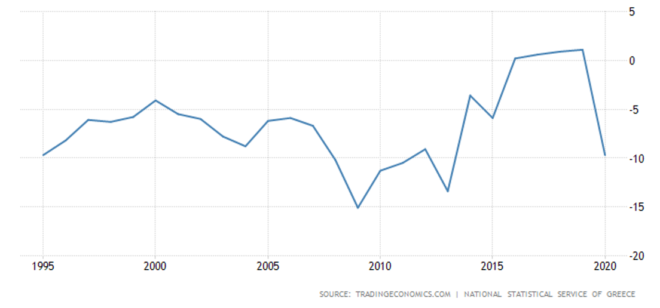
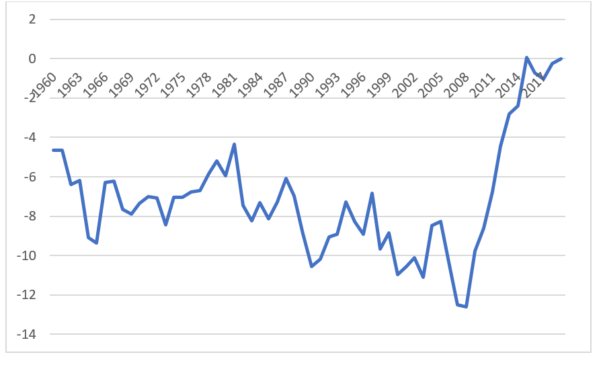
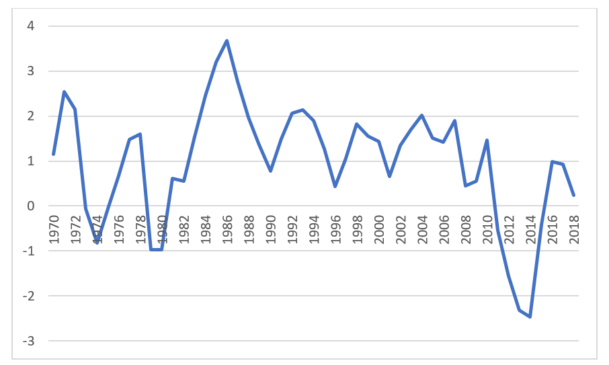
ග්‍රීසියේ රාජ්‍ය ණය ද අයවැය හිඟයද පහත දැක්වේ. එක්තරා අවස්ථාවක ග්‍රීසියේ අයවැය හිඟය ද දේ නි යේ ප්‍රතිශතයක් වශයෙන් 15% සීමාවටද ආසන්න වේ. 2020 වසරේදී කොවිඩ් හේතුවෙන් සියළුම රටවල අයවැය හිඟය වැඩිවිය. මෑත කාලයේදී විවිධ බලපෑම් මධ්‍යයේ අයවැය හිඟය අඩු කර ගැනීමට  ග්‍රීසියේ පිස්කල් ප්‍රතිපත්තිය සමත් වී ඇත. ග්‍රීසියේ අයවැය හිඟයද රාජ්‍ය ණය ද වැඩිවන අතර එරට වෙළෙඳ ශේෂයද හිඟයක් පෙන්නුම් කරයි. අයවැය හිඟය යනු රාජ්‍යයේ අදායම සහ වියදම අතර පරතරයයි. වෙළෙඳ හිඟය යනු ජාතික ගිණුම් වල එනම් රටේ ගිණුම් වල අපනයන හරහා රටට ලැබෙන අදායම සහ අපනයන වෙනුවෙන් පිටරටට ගෙවන වියදම අතර පරතරයයි. අයවැය හිඟය රාජ්‍ය ගිණුම් වල හිඟයක් වන අතර වෙළෙඳ හිඟය ජාතික ගිණුම් වල හිඟයකි. ග්‍රීසියේ වෙළෙඳ හිඟයද පහත දැක්වේ. දීර්ඝ කාලයක වෙළෙඳ ශේෂ හිඟයකින් පසු වර්ෂ 2008 සිට 2015 දක්වා වෙළෙඳ ශේෂ හිඟය සීග්‍රයෙන් අඩුකර ගැනීමට ග්‍රීසිය සමත්වී ඇත.

රාජ්‍ය ණය- ග්‍රීසිය ද දේ නි යේ ප්‍රතිශතයක් වශයෙන්

government debt in sri lanka harsha gunasena

අයවැය හිඟය ග්‍රීසිය- ද දේ නි යේ ප්‍රතිශතයක් වශයෙන්


government debt in sri lanka harsha gunasena

මුලාශ්‍රය  :        https://tradingeconomics.com

වෙළෙඳ ශේෂයේ හිඟය ග්‍රීසිය- ද දේ නි යේ ප්‍රතිශතයක් වශයෙන්

government debt in sri lanka harsha gunasena

මුලාශ්‍රය  :        https://data.worldbank.org/

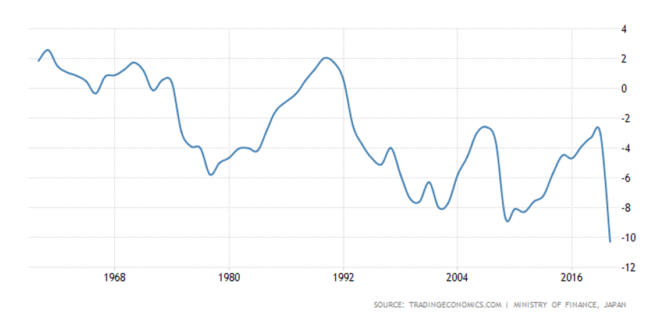
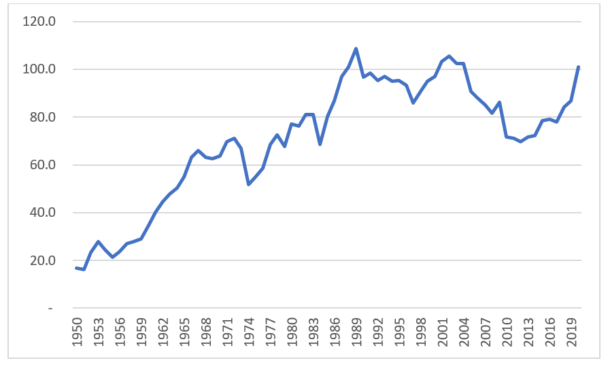
ජපානයේද රාජ්‍ය ණය, අයවැය හිඟය සහ වෙළෙඳ ශේෂය පහත දක්වා ඇත. ග්‍රීසිය සහ ජපානය අතර වෙනස නම් වසර කිහිපයක් හැරුණු විට දීර්ඝ කාලීනව වෙළෙඳ ශේෂයේ අතිරික්තයක් ජපානය විසින් පෙන්නුම් කර තිබීමයි. ග්‍රීසිය වෙළෙඳ ශේෂයේ හිඟය අඩු කර ගෙන ඇත්තේ මෑත කාලයේ දිය. ජපානය වෙළෙඳ ශේෂයේ අතිරික්තයට අමතරව වෙළෙඳ ශේෂයද ඇතුළත් වන විදේශ යන් ගෙන් ලැබෙන ප්‍රේෂණ, පොලි අදායම්, ආයෝජන ආදායම් වැනි සියළුම ලැබීම් ඇතුළු ගෙවුම් ශේෂයේද අතිරික්තයක් පෙන්නුම් කරයි. ජපන් රාජ්‍ය ණය වලින් වැඩි ප්‍රමාණයක් දේශීය ණය වේ. ජපානයේ පොලි අනුපාතය ඉතා අඩු අගයක් ගනී. පිටරටින් ලැබෙන මුදල් පාවිච්චි කර ජපන් ව්‍යාපාරිකයෝ රාජ්‍ය බැඳුම් කර වල ආයෝජනය කරති. එබැවින් ජපානයේ තත්ත්වය ග්‍රීසියේ මෙන් නොවේ. මෙහි ප්‍රධාන වෙනස වන්නේ ජපානයේ ඇති වෙළෙඳ ශේෂයේ සහ ගෙවුම් ශේෂයේ දීර්ඝ කාලින අතිරික්තයයි.

රාජ්‍ය ණය- ජපානය  ද දේ නි යේ ප්‍රතිශතයක් වශයෙන්

government debt in sri lanka harsha gunasena

අයවැය හිඟය ජපානය – ද දේ නි යේ ප්‍රතිශතයක් වශයෙන්

government debt in sri lanka harsha gunasena

වෙළෙඳ ශේෂය ජපානය – ද දේ නි යේ ප්‍රතිශතයක් වශයෙන්

government debt in sri lanka harsha gunasena

මුලාශ්‍රය  :        https://data.worldbank.org/


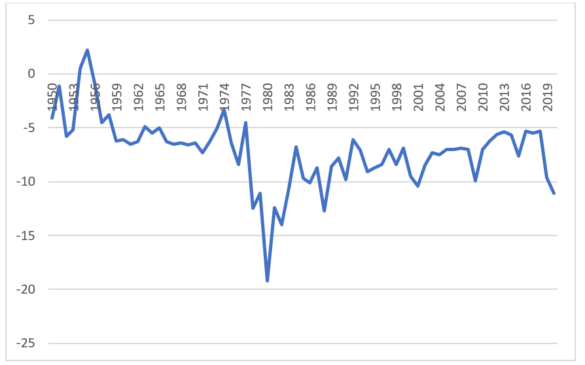
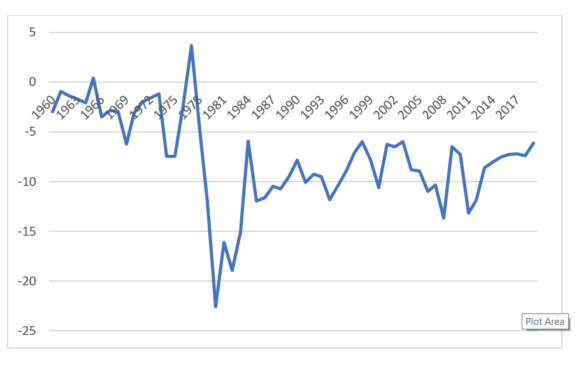
ශ්‍රී ලංකාව මේ අතර ස්ථානගත වන්නේ කෙසේද? පසුගිය ලිපි වල සාකච්ඡා කළ පරිදි ශ්‍රී ලංකාවේ අයවැය හිඟයක් ද වෙළෙඳ ශේෂයේ හිඟයක්ද රාජ්‍ය ණය වල වර්ධනයක්ද තිබේ. ශ්‍රී ලංකාවේ අයවැය හිඟය, වෙළෙඳ ශේෂය සහ රාජ්‍ය ණය පිලිබඳ  ප්‍රස්ථාර පහත දක්වා ඇත.  මේ අනුව ශ්‍රී ලංකාව ලං වන්නේ ජපානයට නොව ග්‍රීසිය ටයි. ග්‍රීසිය අතීතයේ ගමන් කළ මාවතේ අපි ගමන් කරමින් සිටිමු. ග්‍රීසිය මෙන් අයවැය හිඟය ද වෙළෙඳ ශේෂ හිඟය ද  අඩුකර ගැනීමට හැකිනම් අපට සහනයක් ලැබෙනු ඇත. ග්‍රීසියේ ජනතාව එසේ කලේ බොහෝ දේවල් කැප කරය. අප අනතුරට පත්වුවහොත් බේරාගැනීමට- ඇපදීමට- සිටියේ ජාත්‍යන්තර මුල්‍ය අරමුදල පමණි. ග්‍රීසියට තිබූ යුරෝපා සංගමය වැනි සංවිධානයක් අපට නොමැත. ජාත්‍යන්තර මුල්‍ය අරමුදලේ කොන්දේසි මූලික වශයෙන් ඉලක්ක වන්නේ අපගේ ණය ගෙවීමේ හැකියාව වර්ධනය කිරීමටය. අපට දැන් අලුත් මිතුරෙක් සිටී. එනම් චීනයයි. චීනය කිසිම කොන්දේසියක් නොපනවයි. මේ හේතුවෙන් අපි ජාත්‍යන්තර මුල්‍ය අරමුදල නොසලකා හැර ඇත්තෙමු. පසුගිය කාලයේ චීනයෙන් අප විසින් හම්බන්තොට වරාය වෙනුවෙන් ලබාගත් ණය ගෙවීමට වරායේ ආදායම ප්‍රමාණවත් නොවූ බැවින් හම්බන්තොට වරායේ අයිතිය දීර්ඝ කාලීන බද්දකට චීනයට පැවරීමට අපට සිදුවිය. රටක් වශයෙන් අපට සිටින මිතුරන් සීමිතය. ජාත්‍යන්තර මුල්‍ය අරමුදල සහ යුරෝපා සංගමය මගින් ග්‍රීසියට විශාල වශයෙන් කොන්දේසි පනවන ලදී. එබැවින් එරට විෂම චක්‍රය හැරවීමට ඔවුන්ට හැකි විය. චීනය අපට මෙම විෂම චක්‍රයේ දිගටම යාමට අනුබල දෙයි. රජය එයට කැමතිය.

දැඩි ණය බරින් මිදීමට කළයුත්තේ රටේ නිෂ්පාදනය හෙවත් දළ දේශීය නිෂ්පාදිතය වැඩි කිරීමයි.එවිට ණය ගෙවීමට ඇති හැකියාව වැඩිවේ. දළ දේශීය නිශ්පාදිතය වැඩි කළ හැකි ක්‍රම බොහෝ තිබේ. අපනයන නිෂ්පාදන සහ සේවා වැඩිකිරීම හරහා දළ දේශීය නිශ්පාදිතය වැඩි කර ගත හොත් වෙළෙඳ ශේෂයේ දැනට ඇති හිඟය ටද එය පිලියමක් වනු ඇත.

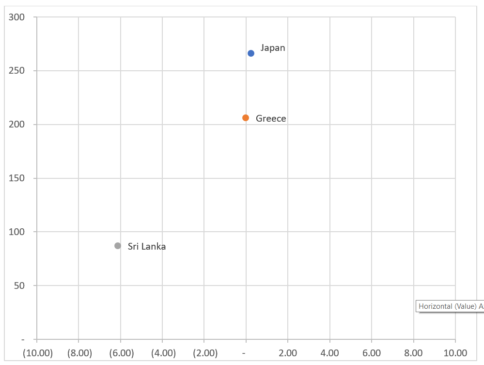
පහත දැක්වෙන ප්‍රස්ථාරයේ 2019 වර්ෂය සඳහා ශ්‍රී ලංකාව ජපානය සහ ග්‍රීසිය එම රටවල ණය ප්‍රමාණය සහ වෙළෙඳ ශේෂ හිඟය යන කරණා දෙක මත ස්ථානගත කර ඇත. ඕනෑම රටකට වඩාත් සුදුසු වන්නේ මෙම ප්‍රස්ථාරයේ පහල දකුණු දෙසට ස්ථානගත වීමයි. එනම් ණය ද  වෙළෙඳ හිඟය   ද අඩු තත්ත්වයයි. මෙය පරිපුර්ණ තත්ත්වයකි.  අඩුම වශයෙන් මෙම තත්ත්වයෙන් ප්‍රතිවිරුද්ධ අතට ගමන් නොකළ යුතුය.ශ්‍රී ලංකාව දැන් කළ යුත්තේ ප්‍රස්ථාරයේ දකුණු දෙසට ගමන් කිරීමයි. ග්‍රීසිය එසේ ගමන් කර ඇත.


මුලාශ්‍රය  :        https://tradingeconomics.com


රාජ්‍ය ණය -ශ්‍රී ලංකාව ද.දේ.නි.යේ ප්‍රතිශතයක් ලෙස-1950-2020

government debt in sri lanka harsha gunasena

අයවැය හිඟය ශ්‍රී ලංකාව  – ද දේ නි යේ ප්‍රතිශතයක් වශයෙන්

government debt in sri lanka harsha gunasena

මුලාශ්‍රය: ශ්‍රී ලංකා මහා බැංකු වාර්තාව 2020

වෙළෙඳ ශේෂය ශ්‍රී ලංකාව  – ද දේ නි යේ ප්‍රතිශතයක් වශයෙන්

government debt in sri lanka harsha gunasena

මූලාශ්‍රය https://data.worldbank.org/


ජපානය, ග්‍රීසිය සහ ශ්‍රී ලංකාව – වෙළඳ ශේෂය X අක්ෂයේද රාජ්‍ය ණය Y අක්ෂයේද දක්වා ඇත.

වෙළෙඳ ශේෂය ශ්‍රී ලංකාව  - ද දේ නි යේ ප්‍රතිශතයක් වශයෙන්

– හර්ෂ ගුණසේන

Published in Aithiya on 6 June 2021

https://www.aithiya.lk/8920/government-debt-in-sri-lanka-harsha-gunasena/

Thursday, June 3, 2021

Dictatorial Open Economy – The Central Bank Of Sri Lanka & The Movement Of The Exchange Rate

 By Harsha Gunasena –

Harsha Gunasena

The Central Bank of Sri Lanka is committed to the stability of the financial system of Sri Lanka but some of the actions of the Bank lead to destabilize the financial system of the country.

It is basic knowledge that managing an economy is a balancing act. When some one is engaged in a business, he cannot fix the bottom line since the bottom line is an effect of several causes including sales and expenses. One cannot fix even sales since sales is an effect of several causes including customer management. One can fix the causes and not the effects. Similarly, only an insane person can think that the exchange rate of a country can be managed  by force exercised in the market. The exchange rate  is an effect of the level of exports and imports of a country. In addition to that there are other causes such as foreign remittances and foreign loans. Sri Lanka is having a long-term deficit in the trade balance and also the current account. Higher level of imports is being set off to a certain extent of exports and worker remittances. Successive governments in Sri Lanka have not taken remedial actions to this situation and the Central Bank is given the task to fix it in this manner.

There is a Sinhala proverb that, ‘athisarayata amuda gasanava vage’. The meaning is ‘like wearing a crupper to cure dysentery’. The Central Bank of Sri Lanka is engaged in this type of activity.

Sri Lanka is facing a severe financial crisis of which the origin was the deficit budgeting policy of the successive governments. Deficit is financed by debt either domestic or foreign. Since there were budget deficits in successive years as well the governments having to borrow to repay the debts. As a result, government debt has increased. Deficit budget is a result of either reduction of the income or increase of the expenditure. If a government reduces taxes mainly of the businesses which is the main source of revenue, the government expects a growth of the economy by the increased economic activities of such businesses. Likewise, when the capital expenses of the government are increased the economy should grow. Even by increasing the recurrent expenses there is a stimulation to the economy. If the economy has grown to the expected levels the debt would have been a smaller percentage of the grown economy which is measured as Gross Domestic Production.

There is another issue as well. In late 1990s Sri Lanka became a lower middle-income country. Thereafter it was much difficult to get concessionary foreign loans. Eventually Sri Lanka has moved to get foreign funds through commercial loans of which the interest rate is high and most of the time the repayment period is shorter. Therefore, annual repayment of the foreign debt is being increasing. The government is facing difficulties to repay the debt installments due to the long-term deficit of the current account. Over a long period, the export revenue of the country is lower than the import expenses. The difference is the trade deficit. This is covered to a great extent by the inward remittances of the migrant workers. However, the successive governments did not treat these migrant workers well. Present government gave lesser priority when bringing down these workers during the Covid time.


This is the issue faced by the government and the country. The present government does not like to go to the IMF requesting relief since IMF imposes conditions. Successive governments and especially this government say that the IMF conditions are not good for the country. What are those conditions? The main condition is to reduce the budget deficit which is the root cause of all these problems. The government does not want to do that since there will be political issues, which means when the government expenses are reduced or the government taxes are increased people will get affected and they will not vote for the government next time.

Neither the government nor the opposition dare to tell the truth to the people since all of them are concerned of their votes and not of the sustainability of the country. Voters in Sri Lanka are sensitive to the economic issues since around 40% of the population is below the poverty line if Sri Lanka is considered an upper middle income country. In upper middle income countries the poverty limit is income of USD 5.5 in 2011 PPP. Per Capita income of Sri Lanka is at the level of USD 4000 which is close to the upper middle income level. This shows the extent of unequal income distribution of the country.

Hence the government goes to China and ask for loans, who gives loans without any hesitation and will not ask the government to reduce the budget deficit. Therefore, the government is also happy and the people are also happy but the basic problem will continue aggravating the situation further. They are postponing the problem to the future generations. However, people who are like the crabs in the pot will have to suffer. Since government have no money to meet the debt, they restrict imports not on systematic manner but on inconsistent manner. Just like King Dutugemunu fought the wars with his brother at the initial stages, according to a famous folk story. Therefore, people will have to suffer.

The Central Bank of Sri Lanka has also joined this process. Their job is to manage the exchange rate. The Central Bank has reduced the interest rates in Sri Lanka which is a good thing. They will sustain it by force even though the interest rate will go up since the government started to shift from foreign borrowing to domestic borrowings. The Central Bank can print the money left and right to fund the government requirements. The problem would be to contain the inflation. Since it is a current issue, the figure cannot be adjusted as some expenditure was transferred to previous year in the Annual Report of Central Bank 2020 to reduce the budget deficit in 2020.

The Central Bank imposed restrictions  on importation of certain categories of motor vehicles and some items categorized as non-essential items for a period of three months on 19 March 2020 by Direction No.1 of 2020. However outside of the Direction minimum supplier credit of 90 days and 180 days was imposed on the importers. Irrespective of that Rupee depreciated against the USD from 181 to 199 from March to mid-April 2020. Since there was reduced crude oil consumption during the period of covid restrictions the Rupee was stable during May – November 2020.

The import bills with 90-180 days of supplier credit, started becoming due for payments from November 2020 which contributed to a depreciation of Rupees beyond Rs 187 against Dollars during November-December 2020 provoking Importers entering in to forward exchange contracts desperately to mitigate the exchange risk. Rupee depreciated above 193 in December 2020 while the Central Bank successfully intervened with their Forex reserves to cross the year at Rs 187 per Dollar. However, In January 2021 Rupee further depreciated to the level of 196.

The Central Bank on 25 January 2021 by Direction No.2 of 2021 directed licensed commercial banks not to enter in to forward exchange contracts with importers for a period of three months which was the only instrument available for importers  in Sri Lanka to mitigate forex risk. This restriction was further extended until further notice and this act prevented the forex market of portraying the real exchange rate.

The Ceylon Petroleum Corporation was forced by the authorities to borrow dollars from the state banks to pay their commitments rather than purchasing dollars from the market. That was one of the reasons of increasing the dollar deposit rates.

The Central Bank issued the gazette 2215/39 on 18 February 2021 imposing a mandatory conversion of 25% of exports immediately upon the receipt of such proceeds and the proceeds should be received within 180 days from the date of exports. The Central Bank was not aware that some of the exporters used to get USD packing credit loans to finance their exports so that when the proceeds come, they had to first settle the loan and thereafter they have hardly anything leftover. Later the direction was amended several times and finally on 9 April 2021 by gazette 2222/60 the minimum mandatory conversion requirement was brought down to 10% of export proceeds and such conversion should take place not immediately but within 30 days of the receipt of the proceeds.

The USD/LKR  rate crossed Rs 200 mark in March 2021 due to continued shortage of dollars in the Domestic Market. This led to exchange rate losses for importers who were deprived of booking their import bills via forward contracts from January onwards due to restrictions. It was announced on 23 March 2021 that the Central Bank entered into a currency swap with the central bank of China for USD 1.5 Bn. and a term Loan of USD 500 Mn was obtained from Chinese Development Bank on 12 April 2021.

On 17 April 2021 the state banks intervened in the market with the blessings of the Central Bank, to artificially bring down the USD/LKR rate to 193 within a day, through sale of Dollars over $ 60 Mn. However, it could not be retained at that level.

Towards the end of April 2021, the Central Bank allowed the licensed commercial banks to get-to-gather and determine on peg for USD/LKR rate which initially started with 199-200 (Bank Buying and Bank Selling Rates respectively). Later it was adjusted to 200-202 with a bid-offer spread of 2 Rupees. Generally, the bid-offer spread is around 0.50 in the interbank market.

At the beginning of May 2021, the Central Bank prevented commercial banks from participating in the interbank forex market to square their forex open positions, so that the banks had to do it internally within the banks. This worsened the situation and created a severe scarcity of dollars in the market.

The Central Bank had meetings on daily basis with the commercial banks to address the issues prevailing in the forex market, but it was evident on subsequent events that these meetings were mere compensatory ones without addressing the real issues.

The widened spread between bank buying and selling rate of USD/LKR made banks happy as they could earn an arbitrage profit by exploiting the foreign exchange earners in the country in spite of severe shortage of dollars in the market. The peg was further widened to 199.50-202.00 on 10 May 2021 where exporters were further penalized by banks due to a lowering the bank buying rate with a wider bid-offer spread of Rs 2.50.

The Central Bank adjusted the bank buying rate downwards expecting the exporters to get frightened of falling exchange rate and induce them to sell their dollars. It was not successful, and the commercial banks collectively adjusted the two-way price to 200-203 on 13 May 2021 with the blessing of the Central Bank.

Identifying that the exporters were not eager to convert their foreign currencies since they get higher deposit rate in dollars, commercial banks collectively acting as a cartel decided a ceiling on dollar deposit rate of 5.50% per annum. It should be noted that commercial banks deposit dollars in Sri Lanka development bonds at 7.5% which is now 2% more than the rate they pay to exporters.

The commercial banks were benefited. They could make money on one hand by having a high spread with the direction of the Central Bank in squaring off their Dollar positions internally and on the other hand by keeping a higher margin of the dollar deposit rates and rates of Sri Lanka development bonds where the banks invest. Both cases were at the expense of the foreign exchange earners of the country.  This type of manipulation of Exchange Rate and Dollar Deposit rates by banking system of the country including the regulator can be identified as a market collusion.

The commercial banks initially gave priority to the import bills open under letters of credit (LC) and they have delayed the payments of non-LC bills. Now they are rejecting the request of the clients to open LCs with the full blessings of the Central Bank due to the severe shortage of dollars in the market. I understand that there are certain foreign obligations of the local companies which were not met in a timely manner causing embarrassment to those local companies.

On 25 May 2021 by direction No. 8 of 2021 the Central Bank revoked the existing limits of foreign currency borrowings of the licensed banks for a period of one year subject to the licensed banks ensuring that such foreign currency borrowings do not give rise to any foreign currency risks.

The Central Bank wants to have both, ravulayi kendayi, the beard and the porridge. They want the licensed banks to borrow foreign exchange which is in short supply now and also not to expose themselves to foreign exchange risks.

Bankers know that it is not appropriate or sometimes suicidal to finance long term projects with short term loans. What they are doing is exactly the same, finding out short term solution to a long term problem.

It appears to be that the intention of the Central Bank is to keep the USD/LKR rate around the level of Rs 185. It is a question who decided this level? Was it by the Central Bank and the Monetary Board or someone outside of the Central Bank has imposed it on them? The Central Bank or whoever that party should realize that exchange rate of a country cannot be managed in this manner causing severe difficulties to the players in the market. At present the Rupee is over valued causing much difficulties to the exporters and foreign exchange earners who brings valuable foreign exchange to the country. The local currencies of some other countries such as Indonesia, India and Vietnam are undervalued and hence the exporters of those countries are at an advantage.

The Central Bank and the person if any who decides the level where the exchange rate should be, are not sensitive to the fact that it is solely exports which will help the country to come out of this situation.

The best bet for Sri Lanka is to increase the manufacture-based exports. This cannot be done overnight, and it is a long term process. Import substitution is good but export promotion is better. When there is import substitution, it can substitute to the level of consumption of our population which is 21 million. There is no such restriction in the exports. If capable we can cater to the entire world.

Successive governments have neglected this, and they were engaged in petty things like the Central Bank is doing in respect of the exchange rate today. There are many entrepreneurs who can do exports who are spread throughout the country and waiting without funds. Although they need capital, they cannot get a short-term loan even, since all the banks in Sri Lanka ask them a collateral which they are unable to give. I have firsthand experience in this respect.

If the government, the Central Bank and the commercial banks if they are interested  to do a real change, they should engage in helping rural entrepreneurs enabling them to access finances without any hinderance and promote exports which will give a lasting long-term solution to the exchange rate problem rather than engaging in hide and seek games.

Published in Colombo Telegraph on 3 May 2021

 https://www.colombotelegraph.com/index.php/dictatorial-open-economy-the-central-bank-of-sri-lanka-the-movement-of-the-exchange-rate/
Sri Lanka’s dictatorial open economy: Management of exchange rate by force

If the Government, the Central Bank and if interested the commercial banks want to bring about a real change, they should engage in helping rural entrepreneurs enabling them to access finances without any hindrance and promote exports which will give a lasting long-term solution to the exchange rate problem rather than engaging in hide and seek games 


Sri Lanka is facing a severe financial crisis of which the origin was the deficit budgeting policy of the successive governments. Deficit is financed by debt either domestic or foreign. Since there were budget deficits in successive years as well the governments having to borrow to repay the debts. As a result, Government debt has increased. 
Deficit budget is a result of either reduction of the income or increase of the expenditure. If a government reduces taxes mainly of the businesses which is the main source of revenue, the government expects a growth of the economy by the increased economic activities of such businesses. 

Likewise, when the capital expenses of the government are increased the economy should grow. Even by increasing the recurrent expenses there is a stimulation to the economy. If the economy has grown to the expected levels the debt would have been a smaller percentage of the grown economy which is measured as Gross Domestic Production. 

There is another issue as well. In the late 1990s Sri Lanka became a lower middle-income country. Thereafter it was much difficult to get concessionary foreign loans. Eventually Sri Lanka has moved to get foreign funds through commercial loans of which the interest rate is high and most of the time the repayment period is shorter. Therefore, annual repayment of the foreign debt is being increasing. The Government is facing difficulties to repay the debt instalments due to the long-term deficit of the current account. 

Over a long period, the export revenue of the country is lower than the import expenses. The difference is the trade deficit. This is covered to a great extent by the inward remittances of the migrant workers. However, successive governments did not treat these migrant workers well. The present Government gave lesser priority when bringing down these workers during the COVID time.


IMF

This is the issue faced by the Government and the country. The present Government does not like to go to the IMF requesting relief since IMF imposes conditions. Successive governments and especially this government say that the IMF conditions are not good for the country. 

What are those conditions? The main condition is to reduce the budget deficit which is the root cause of all these problems. The Government does not want to do that since there will be political issues, which means when the Government expenses are reduced or the Government taxes are increased people will get affected and they will not vote for the Government next time. Neither the Government nor the Opposition dare to tell the truth to the people since all of them are concerned of their votes and not of the sustainability of the country.


China

Hence the Government goes to China and asks for loans, who gives loans without any hesitation and will not ask the Government to reduce the budget deficit. Therefore, the Government is also happy and the people are also happy but the basic problem will continue aggravating the situation further. They are postponing the problem to the future generations. However, people who are like the crabs in the pot will have to suffer. 

Since the Government has no money to meet the debt, it restricts imports not in a systematic manner but in an inconsistent manner. Just like King Dutugemunu fought the wars with his brother at the initial stages, according to a famous folk story. Therefore, people will have to suffer.


Central Bank

The Central Bank of Sri Lanka has also joined this process. Their job is to manage the exchange rate. They are creating history in Sri Lanka. The Central Bank has reduced the interest rates in Sri Lanka which is a good thing. They will sustain it by force even though the interest rate will go up since the Government started to shift from foreign borrowing to domestic borrowings. 

The Central Bank can print the money left and right to fund Government requirements. The problem would be to contain inflation. Since it is a current issue, the figure cannot be adjusted as some expenditure was transferred to previous year in the Annual Report of Central Bank 2020 to reduce the budget deficit in 2020.


Rupee depreciation and forex reserves

The Central Bank imposed restrictions on importation of certain categories of motor vehicles and some items categorised as non-essential items for a period of three months on 19 March 2020 by Direction No. 1 of 2020. However outside of the Direction minimum supplier credit of 90 days and 180 days was imposed on the importers. Irrespective of that the rupee depreciated against the USD from 181 to 199 from March to mid-April 2020. Since there was reduced crude oil consumption during the period of COVID restrictions the rupee was stable during May-November 2020.

The import bills with 90-180 days of supplier credit, started becoming due for payments from November 2020 which contributed to a depreciation of rupees beyond Rs. 187 against dollars during November-December 2020 provoking importers entering into forward exchange contracts desperately to mitigate the exchange risk. The rupee depreciated above 193 in December 2020 while the Central Bank successfully intervened with their forex reserves to cross the year at Rs. 187 per Dollar. However, In January 2021 the rupee further depreciated to the level of 196.

The Central Bank on 25 January 2021 by Direction No. 2 of 2021 directed licensed commercial banks not to enter into forward exchange contracts with importers for a period of three months which was the only instrument available for importers in Sri Lanka to mitigate forex risk. This restriction was further extended until further notice and this act prevented the forex market from portraying the real exchange rate.

The Ceylon Petroleum Corporation was forced by the authorities to borrow dollars from the State banks to pay their commitments rather than purchasing dollars from the market. That was one of the reasons of increasing the dollar deposit rates.

The Central Bank issued the gazette 2215/39 on 18 February 2021 imposing a mandatory conversion of 25% of exports immediately upon the receipt of such proceeds and the proceeds should be received within 180 days from the date of exports. The Central Bank was not aware that some of the exporters used to get USD packing credit loans to finance their exports so that when the proceeds come, they had to first settle the loan and thereafter they have hardly anything leftover. 

Later the direction was amended several times and finally on 9 April 2021 by gazette 2222/60 the minimum mandatory conversion requirement was brought down to 10% of export proceeds and such conversion should take place not immediately but within 30 days of the receipt of the proceeds. 


Dollar shortage and exchange rate losses

The USD/LKR rate crossed the Rs. 200 mark in March 2021 due to continued shortage of dollars in the domestic market. This led to exchange rate losses for importers who were deprived of booking their import bills via forward contracts from January onwards due to restrictions. 

It was announced on 23 March 2021 that the Central Bank entered into a currency swap with the Central Bank of China for $ 1.5 billion and a term loan of $ 500 m was obtained from Chinese Development Bank on 12 April 2021.

On 17 April 2021 the State banks intervened in the market with the blessings of the Central Bank, to artificially bring down the USD/LKR rate to 193 within a day, through sale of dollars over $ 60 million. However, it could not be retained at that level.

Towards the end of April 2021, the Central Bank allowed the licensed commercial banks to get together and determine on peg for USD/LKR rate which initially started with 199-200 (Bank Buying and Bank Selling Rates respectively). Later it was adjusted to 200-202 with a bid-offer spread of 2 Rupees. Generally, the bid-offer spread is around 0.50 in the interbank market. 


Severe scarcity of dollars

At the beginning of May 2021, the Central Bank prevented commercial banks from participating in the interbank forex market to square their forex open positions, so that the banks had to do it internally within the banks. This worsened the situation and created a severe scarcity of dollars in the market.

The Central Bank had meetings on daily basis with the commercial banks to address the issues prevailing in the forex market, but it was evident on subsequent events that these meetings were mere compensatory ones without addressing the real issues. 

The widened spread between bank buying and selling rate of USD/LKR made banks happy as they could earn an arbitrage profit by exploiting the foreign exchange earners in the country in spite of severe shortage of dollars in the market. The peg was further widened to 199.50-202.00 on 10 May 2021 where exporters were further penalised by banks due to a lowering the bank buying rate with a wider bid-offer spread of Rs. 2.50. 

The Central Bank adjusted the bank buying rate downwards expecting the exporters to get frightened of falling exchange rate and induce them to sell their dollars. It was not successful, and the commercial banks collectively adjusted the two-way price to 200-203 on 13 May 2021 with the blessings of the Central Bank.


Market collusion by commercial banks

Identifying that the exporters were not eager to convert their foreign currencies since they get higher deposit rate in dollars, commercial banks collectively acting as a cartel decided a ceiling on dollar deposit rate of 5.50% per annum. It should be noted that commercial banks deposit dollars in Sri Lanka development bonds at 7.5% which is now 2% more than the rate they pay to exporters.

The commercial banks were benefited.  They could make money on one hand by having a high spread with the direction of the Central Bank in squaring off their dollar positions internally and on the other hand by keeping a higher margin of the dollar deposit rates and rates of Sri Lanka development bonds where the banks invest. Both cases were at the expense of the foreign exchange earners of the country.  This type of manipulation of exchange rate and dollar deposit rates by banking system of the country including the regulator can be identified as a market collusion. 

The commercial banks initially gave priority to the import bills open under letters of credit (LC) and they have delayed the payments of non-LC bills. Now they are rejecting the request of the clients to open LCs with the full blessings of the Central Bank due to the severe shortage of dollars in the market.  I understand that there are certain foreign obligations of the local companies which were not met in a timely manner, causing embarrassment to those local companies.

Bankers know that it is not appropriate or sometimes suicidal to finance long-term projects with short-term loans. What they are doing is exactly the same, finding out a short-term solution to a long-term problem.


Who decided USD/LKR rate of Rs. 185?

It appears to be that the intention of the Central Bank is to keep the USD/LKR rate around the level of Rs. 185. Who decided this level? Was it by the Central Bank and the Monetary Board or someone outside of the Central Bank has imposed it on them? 

The Central Bank or whoever that party is should realise that exchange rate of a country cannot be managed in this manner causing severe difficulties to the players in the market. At present the rupee is overvalued, causing much difficulties to the exporters and foreign exchange earners who brings valuable foreign exchange to the country. The local currencies of some other countries such as Indonesia, India and Vietnam are undervalued and hence the exporters of those countries are at an advantage. 

The Central Bank and the person, if any, who decides the level where the exchange rate should be, are not sensitive to the fact that it is solely exports which will help the country to come out of this situation. 

It is basic knowledge that managing an economy is a balancing act. When someone is engaged in a business, he cannot fix the bottom line since the bottom line is an effect of several causes including sales and expenses. One cannot fix even sales since sales is an effect of several causes including customer management. Similarly, only an insane person can think that the exchange rate of a country can be managed in this manner. The exchange rate is an effect of the level of exports and imports of a country. In addition to that there are other causes such as foreign remittances and foreign loans. Sri Lanka is having a long-term deficit in the trade balance and also the current account. Higher level of imports is being set off to a certain extent of exports and worker remittances.


Best bet for Sri Lanka

The best bet for Sri Lanka is to increase the manufacture-based exports. Import substitution is good but export promotion is better. When there is import substitution, it can substitute to the level of consumption of our population which is 21 million. There are no such restriction in the exports. If capable we can cater to the entire world.

Successive governments have neglected this and they were engaged in petty things like what the Central Bank is doing in respect of the exchange rate today. There are many entrepreneurs who can do exports who are spread throughout the country and waiting without funds. Although they need capital, they cannot get a short-term loan even, since all the banks in Sri Lanka ask them a collateral which they are unable to give. I have first-hand experience in this respect.

If the Government, the Central Bank and if interested the commercial banks want to bring about a real change, they should engage in helping rural entrepreneurs enabling them to access finances without any hindrance and promote exports which will give a lasting long-term solution to the exchange rate problem rather than engaging in hide-and-seek games.

Published in Dailyft on 3 may 2021

https://www.ft.lk/harsha-gunasena/Sri-Lanka-s-dictatorial-open-economy-Management-of-exchange-rate-by-force/10490-718732

Monday, May 31, 2021

වෙළෙඳ ශේෂ හිඟය නැති කිරීමේ ප්‍රහාරාත්මක ප්‍රතිපත්තිය!


රටක ජාතික ගිණුම් වල වෙළෙඳ ශේෂය වශයෙන් හඳුන්වන්නේ භාණ්ඩ සහ සේවා අපනයනය කිරීමෙන් ලැබෙන මුදල සහ භාණ්ඩ සහ සේවා ආනයනය කිරීම නිසා ගෙවීමට සිදුවන මුදල අතර වෙනසයි. රටක අපනයන ආනයන වලට වඩා වැඩිනම් මෙය වාසි සහගත ශේෂයක් ලෙසද ආනයන අපනයන වලට වඩා වැඩි නම් අවාසි සහගත ශේෂයක් ලෙසද දක්වනු ලැබේ. මෙය බොහෝවිට රටක දල දේශීය නිෂ්පාදිතයේ ප්‍රතිශතයක් ලෙස දක්වනු ලැබේ.

දීර්ඝ කාලයක් මුළුල්ලේ ලංකාවේ තිබෙන්නේ අවාසි සහගත වෙළෙඳ ශේෂයකි.  මෙය තරමක් දුරට සමනය වන්නේ විශේෂයෙන්ම පිටරට වෙසෙන ශ්‍රමිකයන් එවන මුදල් සහ සංචාරක ආදායම වැනි වෙනත් ලැබීම් වලිනි. මේ සියල්ල එකතු කලවිට ජංගම ගිණුම ලෙස හැඳින්වේ. ශ්‍රී ලංකාවේ ජංගම ගිනුමේද ඇත්තේ හිඟයකි.

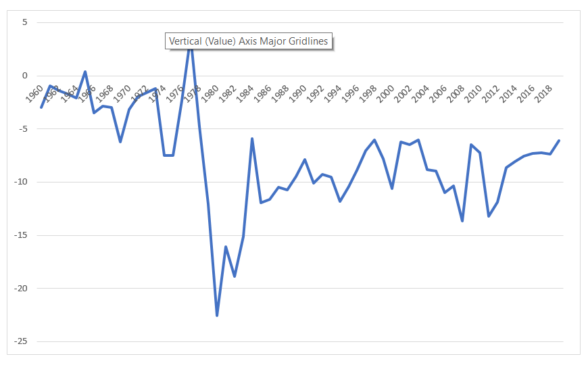
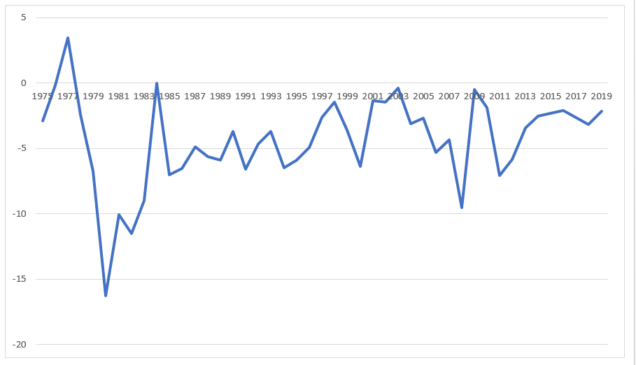
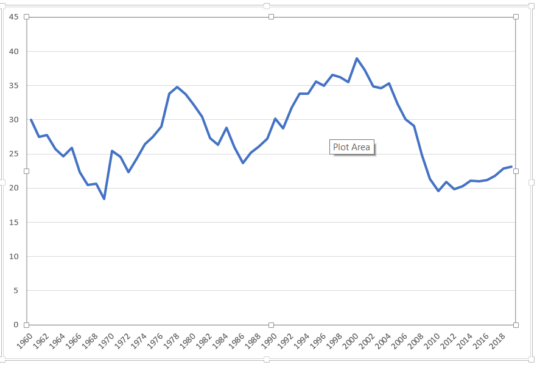
රටේ දල දේශීය නිෂ්පාදිතය රටේ ආර්ථිකයේ ප්‍රමාණය සනිටුහන් කරයි. රටේ ආර්ථිකයේ ප්‍රමාණයේ ප්‍රතිශතයක් ලෙස අපනයන ආදායමද වෙළෙඳ ශේෂයේ හිඟයද ජංගම ගිණුමේ හිඟයද ප්‍රස්ථාර වල පහත දක්වා ඇත.  වර්ෂ 2000 දී මෙරට අපනයන ආදායම දල දේශීය නිෂ්පාදිතයේ % ක් ලෙස 39% ක් වූ අතර 2010 දී එය 20% ක් විය. මෙය වෙළෙඳ ශේෂයේ හිඟය ජංගම ශේෂයේ දී අඩුවී ඇත්තේ විශේෂයෙන්ම  විදේශ ශ්‍රමිකයන්ගේ මුදල එවීම් නිසාය.

ලංකාවට සිය වෙළෙඳ ශේෂය අඩුකර ගැනීම සඳහා පියවර දෙකක් ගත හැකිය. එකක් ආනයන අඩු  කිරීමයි. අනෙක අපනයන වැඩි කිරීමයි. ආනයන අඩු කිරීම සඳහා ක්‍රියා කිරීම ආරක්ෂනවාදී ප්‍රතිපත්තියක් වන අතර අපනයන වැඩි කිරීම සඳහා ක්‍රියාකිරීම ප්‍රහාරාත්මක ප්‍රතිපත්තියකි. ශ්‍රී ලංකාව විසින් මේ අවස්ථාවේදී තෝරාගත යුත්තේ අරක්ෂනවාදී ප්‍රතිපත්තියක් නොවේ. ප්‍රහාරාත්මක ප්‍රතිපත්තියකි.

රටකට කෙරෙන ආනයන එම රටෙහිම නිපදවාගත හැකිනම් එය වටිනා දෙයකි. එහි කිසි වැරැද්දක් නොමැත. එනමුත් රජයකට සිය ප්‍රතිපත්ති සකස් කිරීමේදී මේ දෙකම එකවර කිරීමේ අපහසුතාවයක් පවතී. යම් හෙයකින් දෙකම කළ හැකිනම් වඩාත් හොඳය. දෙකින් එකක් තෝරාගත යුතු නම් තෝරාගත යුතු වන්නේ ප්‍රහාරාත්මක ප්‍රතිපත්තියයි.

ඒ මේ නිසාය. අපනයන වර්ධනයට සීමාවක් නැත. ආනයන ආදේශනයට සීමාවක් තිබේ. එනම් මෙරට වෙළෙඳපොළ ප්‍රමාණයයි. මේ සඳහා මෙරට සිටින අපනයන ව්‍යාපාරිකයන් ද රාජ්‍යයද සූදානම් විය යුතුය. එමෙන්ම අපනයන වර්ධනය සඳහා රාජ්‍යය සහ ව්‍යාපාරිකයන් මතුනොව රටේ සියළු ආයතන සහ විපක්ෂයද ඇතුළු සියළු පුරවැසියන්ගේ සහාය ලැබිය යුතුය. මේ සඳහා රටට වැඩි ශක්තියක් ඇති කර්මාන්ත හඳුනා ගත යුතුය. තොරතුරු තාක්ෂනය මේ සඳහා නිදසුනකි. ඒ සඳහා මිනිස් බලය පුහුණු කළ යුතුය. ආයතන ඇති කළ යුතුය. සමුළුවක් කැඳවා ප්‍රතිපත්ති ප්‍රකාශයට පත් කිරීමෙන් පමණක් සියල්ල සිදු නොවේ. ඒවා ක්‍රියාත්මක කළ යුතුය. මෙවැනි රටක ප්‍රතිපත්ති ඉබේ ක්‍රියාත්මක නොවේ.

කුඩා වෙළෙඳපොළක් සහිත ලංකාව වැනි කුඩා රටකට  වෙළෙඳාමෙන් තොරව ඉක්මන් සංවර්ධනයකට යාම අපහසු කටයුත්තකි. ලංකාවේ භූගෝලීය පිහිටීම අනුවද ලංකාවට වෙළෙඳාමේ කේන්ද්‍රස්ථානයක් ලෙස ක්‍රියා කළ හැක. මෙරට ඉතිහාසය පුරා සිදුවී ඇත්තේ එයයි. මෙරට ව්‍යාපාරිකයන් ප්‍රමාණයෙන් කුඩා ලංකාවේ වෙළෙඳපොළ අරමුණු කර නොගෙන සමස්ත ලෝක වෙළෙඳපොළ අරමුණු කර ගතහොත් රටට වැඩි ආර්ථික ප්‍රතිලාභ අපේක්ෂා කළ හැක.

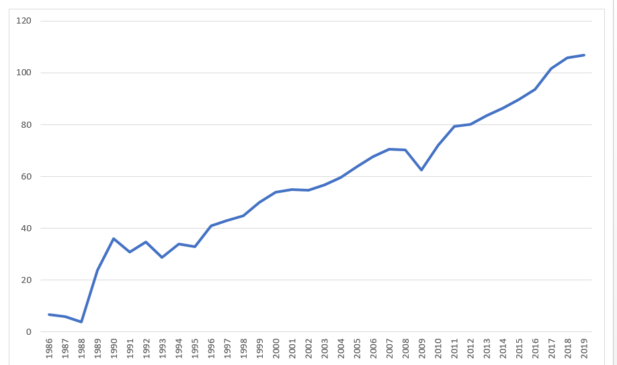
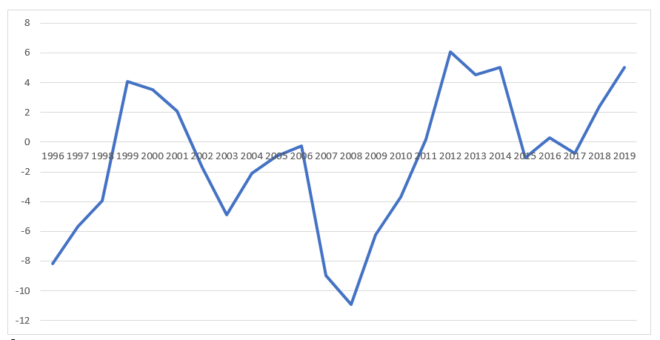
වියට්නාමය යුද්ධයෙන් බැට කෑ රටක් වූ අතර යුද්ධය අවසන් වූයේ 1975 දිය. වර්ෂ 1986  සිට 2019 දක්වා එරට අපනයනය සීග්‍ර වර්ධනයක් අත්පත් කර ගෙන ඇත. ලංකාවේ අපනයනය සම්බන්ධ පළමු ප්‍රස්ථාරය සමඟ මෙය සසඳා බැලිය හැක.  අපනයන වර්ධනයේ ප්‍රහාරාත්මක ප්‍රතිපත්තියකට වියට්නාමය හොඳ උදාහරණයකි. එරට ජංගම ගිණුමේ ශේෂය ඊළඟ ප්‍රස්ථාරයේ දැක්වේ. මෙයින් පැහැදිලි වන්නේ අපනයන සමඟ ආනයනද වැඩිවී රටේ වෙළෙඳාම වැඩිවන බවයි. මෑත අවුරුදු වලදී ජංගම ගිණුමේ  ශේෂය අතිරික්තයක් පෙන්නුම් කරයි.

Export of Goods and Services Sri Lanka

ශ්‍රී ලංකාව -භාණ්ඩ සහ සේවා අපනයනය ද. දේ, නි. යේ % ලෙස 1960-2019

Export of Goods and Services Sri Lanka

ශ්‍රී ලංකාවේ වෙළෙඳ ශේෂය ද.දේ.නි යේ % ලෙස 1960-2019

Export of Goods and Services Sri Lanka

ශ්‍රී ලංකාවේ ජංගම ගිනුමේ ශේෂය ද.දේ.නි.යේ % ලෙස 1975-2019

Export of Goods and Services Sri Lanka

වියට්නාමය- අපනයන ද.දේ.නි. යේ % ලෙස 1986-2019

Export of Goods and Services Sri Lanka

වියට්නාමය  ජංගම ගිනුමේ ශේෂය ද.දේ.නි.යේ % ලෙස 1975-2019


හර්ෂ ගුණසේන

මූලාශ්‍රය https://data.worldbank.org/

https://www.aithiya.lk/policy-on-elimination-of-trade-deficit-sri-lanka-harsha-gunasena/

Published on 30 May 2021- aithiya.lk

Monday, May 24, 2021

අයවැය හිඟය සහ රාජ්‍ය ණය – හර්ෂ ගුණසේන

 Budget deficit and public debt in sri lanka

ශ්‍රී ලංකාවේ රාජ්‍ය ණය පිළිබඳව ගැටලුවක් තිබෙන බව සියළු දෙනාම දනිති. නමුත් එම ගැටලුවේ මූලය කුමක්දැයි බෙහෝ දෙනෙක් නොදනිති. එම ගැටලුවේ මූලය දීර්ඝ කාලයක් තිස්සේ පවතින අයවැය හිඟය සහ එම වැඩිපුර වියදම් කරන ලද මුදල් වලින් හෝ අඩුවෙන් ලැබූ ආදායම නිසා ආර්ථිකයේ වර්ධනයක් නොවීමයි. අඩුවෙන් ආදායම ලැබෙන්නේ බදු අඩු කිරීම නිසාය. ව්‍යාපාරිකයන්ට බදු අඩු කිරීම මගින් ඔවුන්ගේ නිෂ්පාදනය ඉහළ ගොස් ආර්ථිකය වර්ධනය වනු ඇතැයි රජය අපේක්ෂා කරයි. වැඩිපුර ප්‍රාග්ධන වියදම් කිරීම මගින් ආර්ථිකය ප්‍රසාරණය වේ. එබැවින් අඩුවෙන් ආදායම් ලැබීම නිසාද වැඩියෙන් වියදම් කිරීම නිසාද යම් හෙයකින් ආර්ථිකයේ ප්‍රමාණාත්මක වර්ධනයක් වූවා නම් ගෙවීමට ඇති ණය ආර්ථිකයේ විශාල වූ ප්‍රමාණයට සාපේක්ෂව අඩු අගයක් ගන්නා නිසා ණය පිලිබඳ ප්‍රශ්ණය ප්‍රශ්ණයක් නොවනු ඇත.

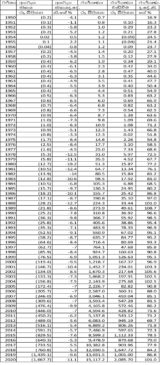
ශ්‍රී ලංකා මහබැංකුවේ 2020   වාර්ෂික වාර්තාවේ 6 වන වගුවේ සහ 7 වන වගුවේ දැක්වෙන රාජ්‍ය මුල්‍ය සහ රාජ්‍ය ණය තොරතුරු අනුව පිළියෙළ කළ වගුවක්  පහත දක්වා ඇත. එහි 1950 සිට 2020  දක්වා අයවැය හිඟය ද (1954 සහ 1955 වර්ෂ වල අයවැය අතිරික්තයකි. ඒ අනුව ඒ වර්ෂ දෙකේ පිළිවෙලින් රු. මිලියන 24 ක සහ 117 ක අතිරික්තයක් ඇත.) අයවැය හිඟය දළ දේශීය නිෂ්පාදිතයේ ප්‍රතිශතයක් ලෙසද, එක එක වර්ෂය අවසානයේ රාජ්‍ය ණය ද, අදාල වර්ෂය තුල වැඩිවූ රාජ්‍ය ණය ප්‍රමාණයද, රාජ්‍ය ණය  දළ දේශීය නිෂ්පාදිතයේ ප්‍රතිශතයක් ලෙසද දැක්වේ.

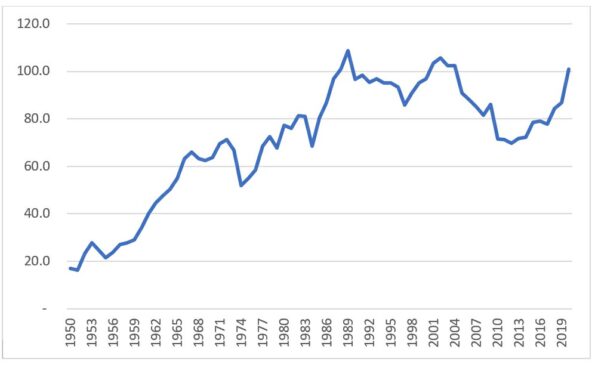
එක එක වර්ෂයේ අයවැය හිඟයේ  සහ රාජ්‍ය ණය වැඩිවීමේ අගයයන් සමාන නොවුනත් ආසන්න වශයෙන් සමාන වේ. මුළු කල පරාසය තුලම අයවැය හිඟයයන්ගේ එකතුව රු. බිලියන11,376 කි.  වර්ෂ 2020 අවසානයේ දී මුළු රාජ්‍ය ණය රු. බිලියන  15,117  කි. මේ අගයයන් දෙකේ වෙනස රු. බිලියන 3,741 කි. විදේශ ණය සම්බන්ධයෙන් රුපියල අව ප්‍රමාණය වීම නිසා වැඩිවන අනුරූප රුපියල් ප්‍රමාණය ඇතුළු තවත් හේතු නිසා මෙවැනි වෙනසක් ඉතිරිවේ. වර්ෂ 1950  සිට 2020 දක්වා රාජ්‍ය ණය දල දේශීය නිෂ්පාදිතයේ ප්‍රතිශතයක් ලෙස පහත දැක්වෙන ප්‍රස්ථාරයේ දක්වා තිබේ

මෙම තත්ත්වය ලඟා කර ගැනීම සඳහා නිදහසෙන් පසු සිටි සියළුම ආණ්ඩු වගකිව යුතුවේ. අවසාන තීරුවේ දැක්වෙන රාජ්‍ය ණයේ දළ දේශීය නිෂ්පාදිතයේ ප්‍රතිශතය අනුක්‍රමයෙන් පහල යන අවස්ථා වලදී එයට හේතුව ආර්ථිකයේ වෘද්ධියක් ඇතිවීමයි. මෙම ප්‍රතිශතය වර්ෂ 1988 දී ද නැවත 2001 දීද 100% ඉක්මවා ගිය අතර පසුව ඇතිවුන ආර්ථික වෘද්ධිය නිසා එම අගය පහල මට්ටමකට වැටුණි. නැවතත් 2020 දී එය 100% ඉක්මවා ගොස් ඇත.

මෙයට අමතරව රාජ්‍ය ණය තත්ත්වය බරපතල වන තවත් හේතුවක් තිබේ.  එනම් ලංකාව 1997 දී අඩු මැදි ආදායම් ලබන රටක් බවට පත්වීමයි. එහි පදනම ඒක පුද්ගල ආදායමයි. ඉන්පසු අඩු පොලී ණය රටට නොලැබේ. වාණිජ ණය වන ඩොලර් බැඳුම්කර වල පොලී අනුපාත වැඩිය. එමෙන්ම ඒවා සංවර්ධන ණය මෙන් දීර්ඝ කාලීන ද නොවේ.

එබැවින් ගෙවීමට සිදුවන පොලිය වැඩිවීම සහ ඉක්මනින් ගෙවීමට සිදුවීම නිසා වාර්ෂිකව ගෙවිය යුතු ණය පොලිය සහ වාරිකය අනුක්‍රමයෙන් වැඩි වෙමින් තිබේ. දීර්ඝ කාලීනව රටේ අපනයන ආදායම ආනයන වියදමට වඩා අඩු බැවින් රටේ විදේශ සංචිත වල හිඟයක් ද තිබේ.එබැවින් තත්ත්වය අනුක්‍රමයෙන් බරපතල වෙයි.

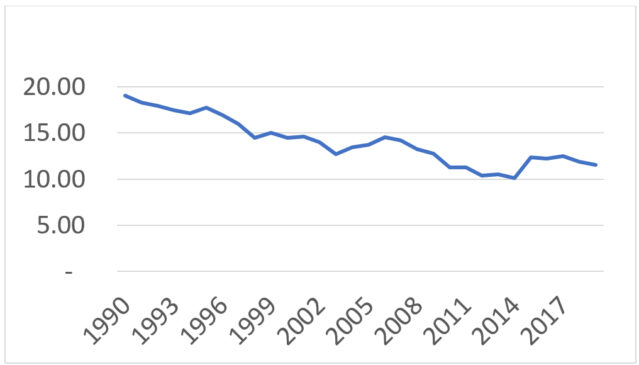
පහත සඳහන් ප්‍රස්ථාරයෙන් පෙන්වන පරිදි රටේ බදු ආදායම දල දේශීය නිෂ්පාදිතයේ ප්‍රතිශතයක් ලෙස අනුක්‍රමයෙන් අඩු වෙමින් යයි.1990 දී 20% කට ආසන්නව තිබු මෙම අනුපාතය   2014 දී  10%  ක් දක්වා අඩුවී තිබුණි. මෙම තත්වයද අයවැයේ හිඟයකට බලපායි. වර්ෂ 2004  සිට  2014 දක්වා රාජ්‍ය ණයේ දළ දේශීය නිෂ්පාදිතයේ ප්‍රතිශතය 102%  සිට  72% දක්වා අඩු වී ඇත.

එමෙන්ම පසුගිය මහින්ද රාජපක්ෂ පාලන යුගයේදී රජයේ විවිධ ආයතන වලට කෙලින්ම විදේශ බැංකු වලින් සහ ද්වි පාර්ශ්වික ණය ලබා ගැනීමට පහසුකම් සැලසීම නිසා එම ණය පහත දැක්වෙන වගු  වල පෙන්වනු නොලැබේ.  රටේ සමස්ත විදේශ ණය ප්‍රමාණය ශ්‍රී ලංකා මහා බැංකුවේ වාර්තා වල වෙනම දක්වා ඇත.  ඒ අනුව 2020 දී සමස්ත ණය රු. බිලියන 15, 117  සිට රු. බිලියන 16,427 දක්වා වැඩිවේ. මේ අනුව ද.දේ.නි. යේ ප්‍රතිශතයක් ලෙස ණය 109.7% දක්වා වැඩිවේ. 

(published in Ayithiya on 23 May 2021-https://www.aithiya.lk/budget-deficit-and-public-debt-in-sri-lanka/)

රාජ්‍ය ණය දල දේශීය නිෂ්පාදිතයේ ප්‍රතිශතයක් ලෙස-1950-2020

budget deficit and public debt sri lanka

(මුලාශ්‍රය: ශ්‍රී ලංකා මහා බැංකු වාර්තාව 2020)

රජයේ බදු ආදායම දළ දේශීය නිෂ්පාදිතයේ ප්‍රතිශතයක් ලෙස-1990-2019

budget deficit and public debt sri lanka

(මුලාශ්‍රය: ලෝක බැංකුව https://data.worldbank.org/)

අයවැය හිඟය සහ රාජ්‍ය ණය 1950-2020


budget deficit and public debt sri lanka