Wednesday, May 13, 2020

Leadership of R. Sampanthan: From periphery to centre

In a democracy, arrogance should not be met with arrogance but with patience. Recently the Tamil National Alliance (TNA) met arrogance with patience and they are being criticised for that. 

TNA participated in a meeting convened by the Prime Minister at Temple Trees of the parliamentarians of the last parliament. Ajith Perera and Sujeewa Senasinghe, former parliamentarians of Samagi Jana Balavegaya (SJB) came in a private television channel recently and accused the TNA of having a deal with the Government. A candidate of the Janatha Vimukthi Peramuna (JVP) of the forthcoming general election also expressed same sentiments. Members of the SJB have already forgotten that their leader got almost all the Tamil votes at the last presidential election due to the intervention of the TNA.
Throughout our history after the independence, political parties in the north did not effectively contribute to the politics of the centre.

There were two independent Tamil ministers in the first parliament of Sri Lanka. Later G.G. Ponnambalam, the leader of the All Ceylon Tamil Congress joined the Government as a minister. The second parliament had one independent Tamil minister and two Tamil ministers of the United National Party (UNP). In addition to them G.G. Ponnambalam also was in the cabinet. Under the Premiership of John Kotelawala there were two Tamil ministers in the cabinet, one was from the UNP and the other came from the Senate.

There were no Tamil ministers in the cabinets of S.W.R.D. Bandaranaike in 1956, of Dudley Senanayake in March 1960, and of Sirima Bandaranaike in July 1960. In 1965 Dudley Senanayake Government came into an agreement with the Federal Party to give a solution to the national problem. Accordingly, M. Tiruchelvam became a minister of that Government. However, Tiruchevam and the Federal Party moved away from the Government in 1968 since the agreement was failed.

C. Kumarasurior was a cabinet minister of the Sirima Bandaranaike Government in 1970. In the Governments of J.R. Jayewardene, K.W. Devanayagam and C. Rajadurai of the UNP were cabinet ministers. In addition to them S. Thondaman of the Ceylon Workers Congress (CWC) was also a minister. Thondaman was the only Tamil minister of the governments of R. Premadasa and D.B. Wijetunga. In addition to him, Lakshman Kadirgamar was also in the cabinet of Chandrika Kumaratunga. 

Thereafter the Tamil ministers of Sri Lankan governments were from the CWC, the National Union of Workers, the Upcountry Peoples Front (political parties of the plantations), the Democratic People’s Front (Mano Ganesan), the Eelam People’s Democratic Party (Douglas Devananda) and the UNP.

Therefore the main political parties in the north were represented in Sri Lankan cabinets only by G.G. Ponnambalam and M. Tiruchelvam. Additionally, A. Amirthalingam was the leader of opposition in 1977 and R. Sampanthan was the leader of opposition in 2015.


Initial stages

Therefore, at the initial stages Tamil political parties contributed to the national level activities and subsequently they were mainly engaged in provincial politics. Their voice was not prominent in the parliament in national issues other than the ethnic problem. The role played by Amirthalingam at the national level was limited. He was locked up in ethnic issue. Subsequently the then Government passed laws forcing them to move out of the 

parliament. 

In contrast to this situation the TNA with the leadership of R. Sampanthan gradually entered into the national level politics. Singing of national anthem in Tamil soon after the end of the war was promoted by the leadership of Sampanthan. This was prohibited by the Liberation Tigers. It was Sampanthan who brought Vigneswaran to Presidential Secretariat to take oath as the Chief Minister although it could have been done in Jaffna. The Government at that time grossly ignored these political messages. 

It was Sampanthan who boldly said that the approval of majority Sinhalese is needed to arrive at a lasting solution to the ethnic problem. It was the TNA led by Sampanthan which supported the progressive work of the previous government from the opposition. When the leaders of the previous government, Maithripala Sirisena and Ranil Wickremesinghe were moving very slowly to establish a new constitution by not giving political leadership to the process contrary to the promises made it was the TNA led by Sampanthan which supported the democratic process of the government ignoring the possible challenge coming from their electorate. 

When the President of our Democracy launched a rebellion against the very Democracy in October 2018, the TNA led by Sampanthan was one of the parties which came forward against it and supported one of the petitions filed at the Supreme Court.

The TNA led by Sampanthan supported the Government established thereafter which did not have a clear majority in the parliament. While all these things were happening, they were not able to get released all the Tamil prisoners who were in prisons without any charges for a long time. 

At that time, the Sri Lanka Podujana Peramuna (SLPP) which was in the opposition accused the government and the TNA of having a deal.

At the last presidential election, the TNA led by Sampanthan made sure that almost all the Tamil votes were given to Sajith Premadasa.

A former member of parliament of TNA, M.A. Sumanthiran played a crucial role in questioning the position taken by the President in the current constitutional crisis. When he was asked whether he will go to courts in this respect he said he will if the problem cannot be solved after presenting the facts to the former Speaker and to the President. 

Accordingly, the opposition political leaders sent a very positive and responsible letter to the President and they got an unexpected aggressive response. Thereafter the SJB said that they will not participate the meeting convened by the Prime Minister. UNP also declined to participate although previously they said they would participate.

In this background the TNA said that it will attend the meeting which is a positive act under democratic traditions. One does not have to refuse to participate in democratic processes even though the other party is arrogant. At the meeting, the TNA criticised the steps taken by the government in this constitutional crisis. 

According to the current position the President is adamant in his stand and matters will have to be settled at the courts. It was reported that one of the petitions filed will be supported by Sumanthiran. The SJB and the Centre for Policy Alternatives also have filed fundamental rights petitions.


A deal with the Government

The opposition accuses the TNA of having a deal with the Government in this background.

These accusations are very much similar to the accusations levelled against the TNA by the SLPP during the previous regime. On one hand the TNA is getting matured politically and entering into the national politics and on the other hand the SJB is following the disgraceful political actions followed by the SLPP some time back. By this disgraceful political action both the SLPP and SJB expect to get the votes of Sinhala voters whom they think fools. Unfortunately these voters, educated or not, proved throughout the history that they were within the expectations of the politicians. 

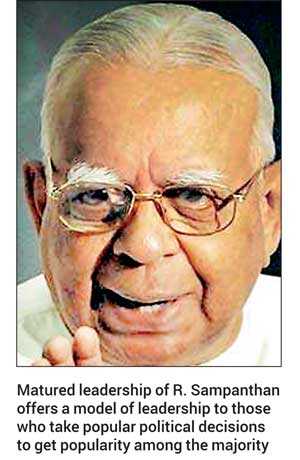
It is our experience that so called national political parties take primitive political decisions as solutions to grave national problems. In this background TNA which is categorised as an ethnic and peripheral political party has taken national level political decisions in the recent past. Matured leadership of R. Sampanthan offers a model of leadership to those who take popular political decisions to get popularity among the majority. He takes these decisions while there is a rival political movement in the north as well which promotes popular political decisions. TNA proved that their approach is always democratic. 

Therefore, we should appreciate the mediation of the TNA at this uncertain time. They are in the process of increasing their contribution to the national politics gradually. We can see the response to their process by their voters in the near future. 
Published in DailyFt on 12 May 2020

Thursday, May 7, 2020

National Leadership Of R. Sampanthan

By Harsha Gunasena –
Harsha Gunasena
The Tamil National Alliance (TNA) is being criticized these days due to their participation in the meeting convened by the Prime Minister at Temple Trees of the parliamentarians of the last parliament. Ajith P. Perera and Sujeewa Senasinghe, former UNP parliamentarians and now members of Samagi Jana Balavegaya (SJB) came in a private television channel recently and accused the TNA of having a deal with the government. A candidate of the Janatha Vimukthi Peramuna (JVP) of the forthcoming general election also expressed same sentiments. Members of the SJB have already forgotten that their leader got almost all the Tamil votes at the last presidential election due to the intervention of the TNA.
Throughout our history after the independence, political parties in the North did not effectively contribute to the politics of the Centre.
There were two independent Tamil ministers in the first parliament of Sri Lanka. Later G.G. Ponnambalam, the leader of the All Ceylon Tamil Congress joined the government as a minister. The second parliament had one independent Tamil minister and two Tamil ministers of the United National Party (UNP). In addition to them G.G. Ponnambalam also was in the cabinet. Under the Premiership of Sir John Kotelawala there were two Tamil ministers in the cabinet, one was from the UNP and the other came from the Senate.
Sampanthan
There were no Tamil ministers in the cabinets of S.W.R.D. Bandaranaike in 1956, of Dudley Senanayake in March 1960, and of Sirimavo Bandaranaike in July 1960. In 1965 Dudley Senanayake government came into an agreement with the Federal Party to give a solution to the national problem. Accordingly, M. Tiruchelvam became a minister of that government. However, Tiruchevam and the Federal Party moved away from the government in 1968 since the agreement was failed. 
C. Kumarasurior was a cabinet minister of the Sirimavo Bandaranaike government in 1970. In the governments of JR Jayewardene, K.W. Devanayagam and C.Rajadurai of the UNP were cabinet ministers. In addition to them S. Thondaman of the Ceylon Workers Congress (CWC) was also a minister. Thondaman was the only Tamil minister of the governments of R. Premadasa and D.B. Wijetunga. In addition to him, Lakshman Kadirgamar was also in the cabinet of Chandrika Kumaratunga.    
Thereafter the Tamil ministers of Sri Lankan governments were from the CWC, the National Union of Workers, the Upcountry Peoples Front (political parties of the plantations), the Democratic People’s Front (Mano Ganesan), the Eelam Peoples Democratic Party ( Douglas Devananda) and the UNP.
Therefore the main political parties in the North were represented in Sri Lankan cabinets only by G.G. Ponnambalam and M. Tiruchelvam. Additionally, A. Amirthalingam was the leader of opposition in 1977 and R. Sampanthan was the leader of opposition in 2015. 
Therefore, at the initial stages Tamil political parties contributed to the national level activities and subsequently they were mainly engaged in provincial politics. Their voice was not prominent in the parliament in national issues other than the ethnic problem. The role played by Amirthalingam at the national level was limited. He was locked up in ethnic issue. Subsequently the then government passed laws forcing them to move out of the parliament. 
In contrast to this situation the TNA with the leadership of R. Sampanthan gradually entered into the national level politics. Singing of national anthem in Tamil soon after the end of the war was promoted by the leadership of Sampanthan. This was prohibited by the Liberation Tigers. It was Sampanthan who brought Vigneswaran to Presidential Secretariat to take oath as the Chief Minister although it could have been done in Jaffna. The government at that time grossly ignored these political messages.   
It was Sampanthan who boldly said that the approval of majority Sinhalese is needed to arrive at a lasting solution to the ethnic problem. It was the TNA led by Sampanthan which supported the progressive work of the previous government from the opposition. When the leaders of the previous government, Maithripala Sirisena and Ranil Wickremesinghe  were moving very slowly to establish a new constitution by not giving political leadership to the process contrary to the promises made it was the TNA led by Sampanthan which supported the democratic process of the government ignoring the possible challenge coming from their electorate. 
When the President of our Democracy launched a rebellion against the very Democracy in October 2018, the TNA led by Sampanthan was one of the parties which came forward against it and supported one of the petitions filed at the Supreme Court.
The TNA led by Sampanthan supported the government established thereafter which did not have a clear majority in the parliament. While all these things were happening, they were not able to get released all the Tamil prisoners who were in prisons with out any charges for a long time. 
At that time, the Sri Lanka Podujana Peramuna (SLPP) which was in the opposition accused the government and the TNA of having a deal.
At the last presidential election, the TNA led by Sampanthan made sure that almost all the Tamil votes were given to Sajith Premadasa.
A former member of parliament of TNA, M.A. Sumanthiran played a crucial role in questioning the position taken by the President in the current constitutional crisis. When he was asked whether he will go to courts in this respect he said he will if the problem cannot be solved after presenting the facts to the former Speaker and to the President. 
Accordingly, the opposition political leaders sent a very positive and responsible letter to the President and they got an unexpected aggressive response. Thereafter the SJB said that they will not participate the meeting convened by the Prime Minister. UNP also declined to participate although previously they said they would participate.
In this background the TNA said that it will attend the meeting which is a positive act under democratic traditions. One does not have to refuse to participate in democratic processes even though the other party is arrogant. At the meeting, the TNA criticized the steps taken by the government in this constitutional crisis.   
According to the current position the President is adamant in his stand and matters will have to be settled at the courts. It was reported that one of the petitions filed will be supported by Sumanthiran. The SJB and the Centre for Policy Alternatives also have filed fundamental rights petitions.
The opposition accuses the TNA of having a deal with the government  in this background.
These accusations are very much similar to the accusations levelled against the TNA by the SLPP during the previous regime. On one hand the TNA is getting matured politically and entering into the national politics and on the other hand the SJB is following the disgraceful political actions followed by the SLPP some time back. By this disgraceful political action both the SLPP and SJB expect to get the votes of Sinhala voters whom they think fools.
Therefore, we should appreciate the mediation of the TNA at this uncertain time. They are in the process of increasing their contribution to the national politics gradually. We can see the response to their process by their voters in the near future.
Published in Colombo Telegraph on 7 May 2020
A comment
http://austms.blogspot.com/2020/05/gajalakshmi-paramasivam-09may-2020.html

ආර්. සම්පන්දන්ගේ ජාතික නායකත්වය

අගමැතිවරයා විසින් පසුගිය පාර්ලිමේන්තුවේ සිටි මන්ත්‍රීවරුන් අරලියගහ මන්දිරයට කැඳවූ සාකච්ඡාවට සහභාගී වීම පිළිබඳව ද්‍රවිඩ ජාතික සන්ධානය මේ දිනවල දෝෂ දර්ශනයට ලක් වෙමින් පවතී. ඔවුන්ට ආණ්ඩුව සමඟ ඩීල් එකක් ඇතැයි සමගි ජන බලවේගයේ හිටපු මන්ත්‍රීවරුන් වන අජිත් පෙරේරා ද සුජීව සේනසිංහ ද පසුගිය දා පෞද්ගලික නාලිකාවක කියාසිටිනු දැක ගත හැකි විය. එමෙන්ම ජනතා විමුක්ති පෙරමුණේ ඡන්ද අපේක්ෂකයකුද එම අර්ථයම දෙන කතාවක් කළේය. සමගි ජන බලවේගයේ නායකයාට පසුගිය ජනාධිපතිවරණයේදී සමස්ත ද්‍රවිඩ ඡන්ද ලබා දීමට ද්‍රවිඩ ජාතික සන්ධානය දායක වූ බව එහි සාමාජිකයන්ට දැනටමත් අමතක වී ඇත.

නිදහසෙන් පසු මෙරට දේශපාලන ඉතිහාසය මුළුල්ලේම උතුරේ දේශපාලන පක්ෂවල මෙරට සමස්ත දේශපාලන ක්‍රියාවලියට ඇති දායකත්වය ප්‍රශස්ත මට්ටමක නොපැවතුණි.

ශ්‍රී ලංකාවේ ප්‍රථම පාර්ලිමේන්තුවේ ස්වාධීන ද්‍රවිඩ ඇමතිවරු දෙදෙනකු වූ අතර පසුව ද්‍රවිඩ සංගම් නායක ජී.ජී. පොන්නම්බලම් ආණ්ඩුවට එක් විය. දෙවන පාර්ලිමේන්තුවේ එක්සත් ජාතික පක්ෂ ද්‍රවිඩ ඇමතිවරු දෙදෙනෙක්ද ස්වාධීන ද්‍රවිඩ ඇමතිවරයෙක්ද සිටියහ. ඔවුන්ට අමතරව ජී.ජී. පොන්නම්බලම් ද ඇමති ධුරයක් දැරිය. තුන්වැනි පාර්ලිමේන්තුවේ ජී.ජී. පොන්නම්බලම්ට අමතරව එක්සත් ජාතික පක්ෂ ද්‍රවිඩ මන්ත්‍රීවරයෙක්ද සෙනේට් සභාවෙන් පත්වූ ද්‍රවිඩ මන්ත්‍රීවරයෙක්ද ඇමති ධුර දැරූහ.

වර්ෂ 1956 බණ්ඩාරනායක ආණ්ඩුවේද 1960 මාර්තු, ඩඞ්ලි සේනානායක ආණ්ඩුවේද 1960 ජූලි, සිරිමා බණ්ඩාරනායක ආණ්ඩුවේද ද්‍රවිඩ ඇමතිවරු නොසිටියහ. වර්ෂ 1965 ඩඞ්ලි සේනානායක ආණ්ඩුව පෙඩරල් පක්ෂය සමඟ එකඟතාවකට පැමිණි අතර ඒ අනුව එම්. තිරුචෙල්වම් ඇමති ධුරයක් දැරිය. රට සභා ක්‍රමයක් ඇතිකරමින් ජාතික ප්‍රශ්නයට විසඳුමක් දීමට ඩඞ්ලි සේනානායක උත්සාහ ගත් අතර එය අසාර්ථක වූ බැවින් 1968 දී තිරුචෙල්වම් ද පෙඩරල් පක්ෂයද ආණ්ඩුවෙන් ඉවත් වූහ.

වර්ෂ 1970 සිරිමා බණ්ඩාරනායක ආණ්ඩුවේ ශ්‍රීලනිපයේ සී. කුමාරසූරියර් ඇමති ධුරයක් දැරීය. ජේ ආර් ජයවර්ධන ආණ්ඩු වල කේ. ඩබ්. දේවනායගම් සහ සී රාජදුරෙයි එක්සත් ජාතික පක්ෂයෙන් අමාත්‍ය ධුර දැරූ අතර ලංකා කම්කරු කොන්ග්‍රසයේ එස්. තොන්ඩමාන් ද අමාත්‍ය ධුරයක් දැරීය. ආර්. ප්‍රේමදාස ගේ ආණ්ඩුවේ ද ඩී. බී විජේතුංගගේ ආණ්ඩුවේ ද ද්‍රවිඩ ඇමතිවරයකුට සිටියේ එස්. තොන්ඩමන් පමණි. චන්ද්‍රිකා කුමාරතුංග ආණ්ඩුවේ ඔහුට අමතරව ලක්ෂ්මන් කදිර්ගාමර් ද ඇමති මණ්ඩලයේ සිටියේය. මින් පසුව ඇමති මණ්ඩලවල ද්‍රවිඩ ඇමතිවරුන් වශයෙන් සිටියේ කම්කරු කොන්ග්‍රසයේ, ජාතික කම්කරු සංගමයේ, කඳුරට ජනතා පෙරමුණේ (වතුකරයේ ද්‍රවිඩ පක්ෂ) එක්සත් ජාතික පක්ෂයේ, ප්‍රජාතන්ත්‍රවාදී ජනතා පෙරමුණේ (මනෝ ගනේෂන්) සහ ඊලම් ජනතා ප්‍රජාතන්ත්‍රවාදී පක්ෂයේ (ඩග්ලස් දේවානන්ද) මන්ත්‍රීවරුන් පමණි.

මේ අනුව උතුරේ ප්‍රමුඛ දේශපාලන නියෝජනය කරමින් ඇමති මණ්ඩලවල සිටියේ ජී.ජී. පොන්නම්බලම් සහ එම්. තිරුචෙල්වම් පමණි. මිට අමතරව උතුරේ එක්සත් ද්‍රවිඩ පක්ෂ නියෝජනය කරමින් ඒ. අමිර්තලිංගම් 1977 දී ද ආර්. සම්පන්දන් 2015 දීද පාර්ලිමේන්තුවේ විපක්ෂ නායක ධුර දැරූහ.

මේ අනුව ද්‍රවිඩ ජාතික දේශපාලන පක්ෂ නිදහසින් පසු මුල් කාලයේදී ජාතික තලයේ ක්‍රියාකාරකම් වලට සම්බන්ධ වූ නමුත් පසුව සම්ප්‍රදායික වශයෙන් යෙදී සිටියේ ප්‍රාදේශීය දේශපාලනයකය. පාර්ලිමේන්තුවේ ඔවුන්ගේ හඬ ඉස්මතුවී නොපෙනුණි. අමිර්තලිංගම් විපක්ෂ නායකවරයා වශයෙන් ජාතික මට්ටමෙන් කළ කාර්යභාරය ඉතාමත් සීමිත විය. ඔහු මූලික වශයෙන්ම ජන වර්ග ප්‍රශ්නයේ හිරවී සිටියේය. පසුව එවකට පැවති රජය විසින් ඔවුන්ට පාර්ලිමේන්තුවෙන් ඉවත් වීමට බල කෙරෙන අන්දමින් නීති සම්පාදනය කරන ලදී.

මෙම තත්ත්වයට පටහැනිව ආර්. සම්පන්දන් ගේ නායකත්වයෙන් යුත් ද්‍රවිඩ ජාතික සන්ධානය ජාතික තලයට අනුක්‍රමයෙන් අවතීර්ණ වෙමින් සිටියි. යුද්ධය අවසානයෙන් පසුව කොටි සංවිධානය විසින් ගැයීම තහනම් කොට තිබූ ජාතික ගීය දෙමළෙන් ගැයීමට අනුබල දුන්නේද උතුරේ ප්‍රධාන ඇමති ලෙස පත්වූ විග්නේශ්වරන්ට යාපනයේදීම දිවුරුම් දීමට හැකියාව තිබියදී දිවුරුම් දීම සඳහා ජනාධිපති කාර්යාලයට කැඳවාගෙන ආවේද සම්පන්දන්ගේ නායකත්වය මගිනි. එවකට පැවති ආණ්ඩුව අත්තනෝමතික ලෙස මෙම දේශපාලන සංඥා අවබෝධ කර ගැනීම සහ පාවිච්චි කිරීම පැහැර හැරියහ.

ඉන් පසුව ජාතික ප්‍රශ්නයට විසඳුමක් ලබා ගැනීමට නම් මෙරට සිංහල ජනතාවගේද අනුමැතිය අවශ්‍ය බව කියා සිටියේ සම්පන්දන්ය. වර්ෂ 2015 ඇතිකළ ආණ්ඩුවේ සාධනීය වැඩවලට විපක්ෂයේ සිට සහාය දුන්නේ සම්පන්දන් ගේ නායකත්වයෙන් යුත් ද්‍රවිඩ සන්ධානය මගිනි. පසුගිය ආණ්ඩුව පොරොන්දුවූ පරිදි ජාතික ප්‍රශ්නය විසඳීම සඳහා ඉක්මන් ගමනක් නොගොස් ආණ්ඩුවේ නායකයන් වූ මෛත්‍රිපාල සිරිසේනද රනිල් වික්‍රමසිංහ ද නව ව්‍යවස්ථාවක් සඳහා වන ක්‍රියාමාර්ගයට දේශපාලන නායකත්වයක් නොදී එම ක්‍රියාවලිය අයාලේ යන තත්ත්වයකට පත් කළ විටද තම ඡන්දදායකයන් ගෙන් තමන්ට එල්ල වියහැකි අති විශාල අභියෝගය නොසලකා ආණ්ඩුවේ ප්‍රජාතන්ත්‍රවාදී වැඩ පිළිවෙලට සහයෝගය දුන්නේ සම්පන්දන් ගේ නායකත්වයෙන් යුත් ද්‍රවිඩ සන්ධානය මගිනි.

වර්ෂ 2018 ඔක්තෝබරයේ අපගේ ප්‍රජාතන්ත්‍රවාදී රාජ්‍යයට එරෙහිව එහි ජනාධිපතිවරයා ගැසූ කැරැල්ලේදී රටේ ප්‍රජාතන්ත්‍රවාදී අයිතීන් වෙනුවෙන් එයට විරුද්ධව හඬ නැගුවේද ශ්‍රේෂ්ඨාධිකරණයට ඉදිරිපත් කළ විශාල පෙත්සම් සංඛ්‍යාවෙන් එකකට අනුග්‍රහය දැක්වූයේද සම්පන්දන් ගේ නායකත්වයෙන් යුත් ද්‍රවිඩ සන්ධානය මගිනි.

ඉන් පසුව ඇතිවූ නිත්‍යනුකූල ආණ්ඩුවට අවශ්‍ය බහුතරය නොමැති අවස්ථාවක අවශ්‍ය වූ සහාය විපක්ෂයේ සිට ලබා දුන්නේ සම්පන්දන් ගේ නායකත්වයෙන් යුත් ද්‍රවිඩ ජාතික සන්ධානය මගිනි. මේ සියල්ලම වෙද්දී අත්අඩංගුවට ගෙන නඩු නැතිව සිරභාරයේ සිටින සියළු ද්‍රවිඩ සැකකරුවන් වත් නිදහස් කර ගැනීමට ඔවුන්ට නොහැකි විය.

මේ සියල්ල වෙද්දී එවකට විපක්ෂයේ සිටි පොදුජන පෙරමුණ සම්පන්දන්ට සහ ද්‍රවිඩ ජාතික සන්ධානයට ආණ්ඩුව සමඟ ඇති සම්බන්ධතා පිළිබඳව සහ ඩීල් පිළිබඳව විවිධ චෝදනා කළහ.

ඉන් අනතුරුව එළැඹි ජනාධිපතිවරණයේදී සමස්ත ද්‍රවිඩ ඡන්ද සජිත් ප්‍රේමදාසට ලබාදී ඔහු එම මට්ටමට ඔසවා තැබුවේ සම්පන්දන් ගේ නායකත්වයෙන් යුත් ද්‍රවිඩ ජාතික සන්ධානය මගිනි.

දැනට ඇතිවී ඇති ව්‍යවස්ථා අර්බුදයේදී ජනාධිපතිවරයාගේ ස්ථාවරය නීතිමය වශයෙන් ප්‍රශ්න කරමින් ද්‍රවිඩ ජාතික සන්ධානයේ පාර්ලිමේන්තු මන්ත්‍රී එම්. සුමන්තිරන් විසින් විශාල බලපෑමක් කරන ලදී. මේ සම්බන්ධයෙන් උසාවි යනවා දැයි ඇසූ ප්‍රශ්නයකට ඔහුගේ පිළිතුර වූයේ මේ පිළිබඳව කථානායක වරයාටද ජනාධිපතිවරයාටද කරුණු ඉදිරිපත් කර ප්‍රශ්නය විසඳාගත නොහැකි වුවහොත් උසාවි යන බවය.

මේ අනුව විපක්ෂ දේශපාලන නායකයන් ජනාධිපතිවරයාට යැවූ ඉතාමත් සාධනීය සහ වගකීම් සහගත ලිපියකට අනපේක්ෂිත අන්දමේ ප්‍රහාරාත්මක ප්‍රතිචාරයක් ලැබුණි. එයට පසුව අගමැතිවරයා විසින් කැඳවන ලද සාකච්ඡාවකට සමගි බලවේගය සහභාගී නොවන බව දැනුම් දුන් අතර සාකච්ඡාවට සහභාගී වන බව කලින් කියා සිටි එක්සත් ජාතික පක්ෂය ද සාකච්ඡාවට සහභාගී නොවන බව පසුව කීය.

මේ පසුබිම තුළ ද්‍රවිඩ ජාතික සන්ධානය එම සාකච්ඡාවට සහභාගී වීමට තීරණය කළ අතර එම සාකච්ඡාවේදී ආණ්ඩුවේ ක්‍රියාමාර්ගය පිළිබඳව බරපතළ විවේචනයක් එල්ල කරන ලදී.

දැනට ඇති තත්ත්වය අනුව ජනාධිපතිවරයා තම අත්තනෝමතික සහ අදානග්‍රාහී ස්ථාවරයේ නොසැලී සිටින අතර අවසාන විසඳුම උසාවියේදී බේරා ගැනීමට සිදුවනු ඇත. මේ අනුව දැනට ඉදිරිපත්ව ඇති මූලික අයිතිවාසිකම් පෙත්සමකට සුමන්තිරන් ගේ දායකත්වය ලැබී ඇතැයි වාර්තා විය. එමෙන්ම සමගි ජන බලවේගයද විකල්ප ප්‍රතිපත්ති කේන්ද්‍රයද ඇතුළත්ව මූලික අයිතිවාසිකම් පෙත්සම් 10ක් මේ වන විට ඉදිරිපත්ව ඇත.

ද්‍රවිඩ ජාතික සන්ධානයට ආණ්ඩුව සමඟ ඩීල් එකක් ඇතැයි විපක්ෂයෙන් චෝදනා නැගෙන්නේ මේ පසුබිම තුළය.

මේ කෙරෙන චෝදනා පසුගිය යුගයේ පොදුජන පෙරමුණ විසින් ද්‍රවිඩ සන්ධානයට එරෙහිව කෙරුණු චෝදනා වලට අත්‍යන්තයෙන්ම සමාන වෙයි. මේ අනුව එක් පසකින් ද්‍රවිඩ සන්ධානය දේශපාලන වශයෙන් පරිණත බවට පත්වෙමින් ජාතික දේශපාලනයට අවතීර්ණ වෙමින් සිටින අතර අනෙක් පසින් පොදු ජන පෙරමුණ එවකට අනුගමනය කළ නීච දේශපාලන භාවිතාව, සමගි ජන බලවේගය අනුගමනය කිරීම හරහා ඔවුන්ගේ ද එම භාවිතාවට ඇති කැමැත්ත ප්‍රදර්ශනය වේ. මෙම නීච දේශපාලන භාවිතාව හරහා මේ දෙපාර්ශ්වයම උත්සාහ කරන්නේ ඔවුන් මුග්ධ යයි සිතා සිටින එසේම බොහෝ විට මුග්ධ විය හැකි, දේශපාලන සවිඥානකත්වයෙන් තොර එනමුත් සාක්ෂරතාව සහිත උගත් ද විය හැකි, සිංහල ඡන්ද ආකර්ෂණය කර ගැනීමටයි.

එබැවින් රටේ පවතින මෙම තීරණාත්මක අවස්ථාවේදී ද්‍රවිඩ ජාතික සන්ධානයේ මැදහත් වීම අප විසින් අගය කළ යුතුය. ඔවුන් අනුක්‍රමයෙන් ජාතික දේශපාලනයට ඔවුන්ගේ දායකත්වය ඉහළ නංවමින් සිටිති. ඔවුන්ගේ ක්‍රියාමාර්ගයට ඔවුන්ගේ ඡන්දදායකයන්ගේ ප්‍රතිචාරය අපට නුදුරු අනාගතයේදී දැක ගත හැකි වනු ඇත.

හර්ෂ ගුණසේන විසින් සමබිමට ලියන ලද ලිපියකි.


Published on 7 may 2020
http://www.samabima.com/?p=20823

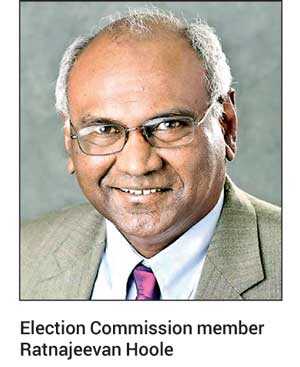
Is Ratnajeevan Hoole independent?

Ratnajeevan Hoole, a member of the Election Commission of Sri Lanka (EC), stirred many a discussion of the behaviour of a public servant in recent times due to the unprecedented nature of his published writings and interviews given to the newspapers. The President said that EC is not independent citing the behaviour of Hoole and many others are of the same view.

Hoole is from Nallur, Jaffna. His father was an Anglican priest and the mother was a lecturer of the Kopay Teacher Training College. His wife is a fellow academic, and they have three daughters and one son. His brothers Rajan and Paul are PhD holders. Rajan was a co-author of ‘Broken Palmyra,’ which equally criticised the atrocities of both LTTE and the State. His brother Noel is the Head of the Technical College, Vaddukoddai. His sister is in New Zealand and he lost two of his brothers.

He graduated from University of Moratuwa with a BSc in electrical engineering. He holds a PhD in electromagnetic field computation from Carnegie Mellon University, USA and a DSc in computational electromagnetics from the University of London (N.M. Perera also had a PhD and a DSc). He was working in Singapore, Canada and USA and came back to Sri Lanka in 1999.

He was appointed Vice Chancellor of University of Jaffna By President Mahinda Rajapaksa in 2006. However, he could not take up the position due to death threats of the LTTE. He went back to USA and came back in 2010 after the defeat of LTTE.

During the 2011 Local Government elections he documented and reported on violation of election law by Government-backed EPDP. After EPDP complained about the defamatory report, he was summoned to the Magistrate’s Court of Kayts and he left the country without going to Court. Later he returned to the country and was appointed a member of the EC in 2015.

Prior to his recent interview to Daily Mirror on 24 April, he has sent a letter to the EC which was published in the newspapers. He claimed that the Chairman of the EC telephoned him and suggested 28 May as the date of election, to which he has disagreed. He further mentioned in the letter that Indian journalist P.K. Balachandran has written in an article that the President wanted the election to be held on 28 May and an announcement of the EC was expected.

His problem was that the Chairman was taking decisions all by himself. He gave various examples to that effect and referred to the press conferences of the Chairman as follows: “He gives press conferences where there is no agreement as a commission on what is to be said and we two sit on either side like dummies.”

Hoole also revealed that the EC Chairman was involved in drafting the gazette dissolving the Parliament in October 2018. “Although Mahinda Deshapriya denies it, I am informed by senior staff that the gazette dissolving Parliament in October 2018 was prepared by Director Channa de Silva, the two went together to the Presidential Secretariat up to the gate where de Silva alighted from the car and returned, leaving Deshapriya to proceed alone.”


Landmark judgement

In October 2018, Hoole as an individual went to the Supreme Court challenging the decision of the President. There are no provisions in the Constitution specifically mentioned that the EC can go to the Supreme Court seeking for clarifications. Since the EC is not an individual it cannot file a Fundamental Rights petition in the Supreme Court.

However, in the case Karunathilaka and another (Varuna Karunathikala and Sunanda Deshapriya) Vs. Dayananda Dissanayake, Commissioner of Elections and another, on 27 January 1999, Justice Mark Fernando with the consent of the other judges including the Chief Justice sated as follows: “Should the 1st respondent have insisted on the poll being held on 28.8.98? While I appreciate the difficult situation in which he was, nevertheless it is necessary to remember that the Constitution assures him independence, so that he may fearlessly insist on due compliance with the law in regard to all aspects of elections – even, if necessary, by instituting appropriate legal proceedings in order to obtain judicial orders. But the material available to this Court indicates that he made no effort to ascertain the legal position, or to have recourse to legal remedies.”

This is a landmark judgement where Justice Fernando redefined the Article 35 of the Constitution where the presidential immunity was dealt with. Justice Fernando found fault with the Commissioner for not instituting appropriate legal proceedings in order to obtain judicial orders. Hence it is up to the EC to find out that way to obtain judicial order when necessary.

Hoole without waiting for the action of EC went alone to the Supreme Court in his capacity as an individual using the only way available to him which was to file a Fundamental Rights application against the President since EC in any case cannot implement an illegal order. If so, it is against the Nuremburg Principles although those were defined based on war crimes. More importantly Hoole won the case. Therefore, it cannot be argued that Hoole was not independent as a result of this act.

Justice Mark Fernando once said that he was delighted to deliver judgements in favour of the public interest and against the authoritarian rulers. Hence Hoole in this case was fearlessly independent.

Hoole defended the decision of the EC to hold the elections after 2 June. “SLMC’s Rauff Hakeem and Nizam Kariapper have declared our decision unconstitutional. Not quite. Yes, Article 70(5) is violated. It is violated not by us but because it is impossible for the new Parliament to meet by 2 June 2020 given COVID-19.”


Gotabaya Rajapaksa’s dual citizenship

In an interview to Daily Mirror on 28 November 2019, Hoole candidly expressed his views about the dual citizenship of the presidential candidate Gotabaya Rajapaksa (GR). He said that he inquired from the US Embassy about the dual citizenship of GR and was informed that they could answer only if the EC asked the question. When he informed this to the EC, he was told that GR was not yet a candidate.

“I thought citizenship is serious enough to raise on nominations day as an objection from me, but was advised by my two colleagues and lawyer friends that others would object, hence I should keep myself dissociated from such objections to examine those objections when they are filed. I was assured that typed-up objections were circulating. However, no objections were raised.”

His intention was to make sure that all candidates were abide by law. There were no objections from the rival candidates. But still he was not happy. He would have been happy only if a proper authority, in this case the US Embassy, informed the EC that GR was no more a US citizen. 


Definition of independence 

The question that now arises is: What is the definition of independence of a member of the EC? Is it only to be independent from the rival candidates and ensure a level playing field? In respect of judicial independence, “It is extremely important that their judicial authority be exercised in an impartial manner.”

The United Nations Development Programme in April 2012 in Cairo, Egypt adopted a set of principles for independent and sustainable electoral management. At the forum five key principles for electoral management were identified; those were, independence, impartiality, transparency, professionalism, and sustainability.

“Independence refers to an Electoral Management Board having a degree of institutional and organisational autonomy and not receiving or responding to undue pressure; impartiality as being an honest broker, playing a fair game and overseeing the political process; transparency means being (and being perceived as) an honest broker; professionalism implies providing a good and cost-effective service; and sustainability means ensuring the possibility of having efficiently managed elections as periodic events.”

Therefore, although the political parties did not raise any objections it is the duty of the EC to satisfy themselves whether GR has adhered to the Constitution in respect of his citizenship.


Media guidelines and compliance

We have observed that the EC Chairman complains that the guidelines issued by them were not followed by the private media institutions. Hoole was of the view that EC could ask the TRC to withdraw the frequency licence of errant broadcasters. This situation arisen since the 19th Amendment went backwards of the provisions in Article 104B.

Prior to the 19th Amendment the Commission could issue guidelines to any broadcasting or telecasting operator and they had to ensure compliance with those guidelines. After the 19th Amendment the EC can issue guidelines to all and State institutions should ensure compliance of those guidelines which should be approved by the Parliament.

The Constitution now is silent about the compliance of the private broadcasters and telecasters. This is making a mockery of the intentions of the 19th Amendment. Hoole’s comment came in this background.

Hoole was very critical of attacking the Muslims who were travelling from Puttalam to Mannar to vote on the Presidential Election day. He mentioned that his request to have special polling stations in Puttalam for them was turned down although the law allowed it.

He said that although the Chairman rightly speaks of the need for national empathy for minorities, there were cruel jokes at the Commission premises about Muslims being cheats who will vote again if allowed to return to Puttalam. We have observed a similar behaviour recently at Derana TV station at an accidentally-televised show at the interval of a program where Muslims were slashed by participant politicians including that of the JVP.

However, the information revealed by Hoole did not include confidential information of the EC. According the Right to Information Act, the information relates to an election conducted by the Commissioner of Elections which is required by the relevant election laws to be kept confidential, should not be revealed to the public. Also, according to the Act, a request for information shall not be refused where the public interest in disclosing the information outweighs the harm that would result from its disclosure.

Therefore, the actions of Hoole improves the transparency of EC and compels its Chairman and the members to be independent and impartial which would strengthen the confidence of the public in the EC. Hoole, by his very presence, I believe, strengthens the EC and the hands of its Chairman as well. He is a legend of our times and that is why his actions are controversial.

රත්නජීවන් හූල් ස්වාධීන ද?

ස්වාධීන කොමිෂන් සභා බලවත් වන්නේ ස්වාධීන පුද්ගලයන්ගෙනි

රත්නජීවන් හූල් ජාතික මැතිවරණ කොමිසමේ සාමාජිකයෙකි. මෑතකදී ඔහු විසින් පළකරන ලද ලිපි සහ දෙන ලද සම්මුඛ සාකච්ඡා පෙර නොවූ විරූ ආකාරයේ ඒවා බැවින් ඔහු මතභේදයට ලක් වන චරිතයක් විය.

හූල් ගේ උපන්බිම යාපනයේ නල්ලු‍ර් වෙයි. ඔහුගේ පියා ඇන්ග්ලිකන් පූජකවරයකු වූ අතර මව කෝපායි ගුරු පුහුණු ආයතනයේ කථිකාචාර්යවරියක වුවාය. ඔහුගේ බිරිඳ විශ්වවිද්‍යාලයීය ආචාර්යවරියක වන අතර ඔවුන්ට දියණියන් තිදෙනෙක් සහ පුත්‍රයෙක් සිටිති. ඔහුගේ සොහොයුරන් වන රාජන් සහ පෝල් පීඑච්ඩී උපාධිධරයෝ වෙති. රාජන් LTTE සංවිධානයේ සහ රජයේ ක්‍රෑරකම් එකසේ විවේචනය කළ බිඳුණු තල්රුක ග්‍රන්ථයේ සම කතුවරයෙකි.

හූල් මොරටුව විශ්වවිද්‍යාලයේ බීඑස්සී උපාධිධාරී විදුලි ඉංජිනේරුවරයෙකි. ඔහුට එම විෂය පිළිබඳවම ඇමරිකා එක්සත් ජනපදයේ කානේජ් මෙලන් විශ්වවිද්‍යාලයෙන් පීඑච්ඩී උපාධියක්ද ලන්ඩන් විශ්වවිද්‍යාලයෙන් ඩීඑස්සී උපාධියක් ද තිබේ. (එන්. එම්. පෙරේරා ටද පීඑච්ඩී උපාධියක් සහ ඩීඑස්සී උපාධියක් තිබුණි.) හූල් සිංගප්පූරුවේද කැනඩාවේ ද ඇමරිකා එක්සත් ජනපදයේ ද සේවය කළ අතර 1999 දී ලංකාවට පැමිණියේය. වර්ෂ 2006 දී එවකට ජනාධිපති මහින්ද රාජපක්ෂ විසින් ඔහු යාපනය විශ්වවිද්‍යාලයේ උපකුලපති ලෙස පත් කරන ලද නමුත් LTTE සංවිධානයේ මරණ තර්ජන හේතුවෙන් එම ධුරය භාර ගැනීමට ඔහුට නොහැකි විය. ඉන්පසු ඔහු නැවත එක්සත් ජනපදයට සංක්‍රමණය වූ අතර LTTE සංවිධානයේ පරාජයත් සමඟ නැවත ලංකාවට පැමිණියේය. වර්ෂ 2011 ප්‍රාදේශීය මැතිවරණ වලදී එවකට ආණ්ඩුවේ සහාය ලැබූ ඊ පී ඩී පී සංවිධානයේ මැතිවරණ නීති උල්ලංඝනය කිරීම් ඔහු විසින් විස්තරාත්මකව වාර්තා කරන ලදී. ඊපීඩීපී සංවිධානය තමන්ට අපහාස කළැයි ඔහුට විරුද්ධව කයිට්ස් මහේස්ත්‍රාත් උසාවියේ නඩු පැවරූ පසුව උසාවියට නොගොස් ඔහු රටින් පිටවී ගියේය. පසුව ඔහු නැවත මෙරටට පැමිණි අතර 2015 දී ජාතික මැතිවරණ කොමිසමේ සාමාජිකයකු ලෙස පත් කරන ලදී.

ජනාධිපතිවරයා හූල්ගේ චර්යාව ගැන සඳහන් කරමින් මැතිවරණ කොමිසම ස්වාධින නැතැයි කීය. තවත් බොහෝ අය එම අදහස දරති.

ඔහුගේ පසුගිය අප්‍රේල් 24 දින ඬේලි මිරර් සම්මුඛ සාකච්ඡාවට පෙර මැතිවරණ කොමිසමට ඔහු ලිපියක් ලිවීය. එය පුවත්පත්වල පලවී තිබිණ. මැතිවරණ කොමිසමේ සභාපතිවරයා තම දුරකථනයෙන් අමතා 2020 මැයි 28 දින මැතිවරණය පැවැත්විය යුතු යයි තමාට යෝජනා කළ බවත් තමා එයට එකඟ නොවූ බවත් ඔහු එහි සඳහන් කළේය. තවද ජනාධිපතිවරයාට මැයි 28 මැතිවරණය පැවැත්වීමට අවශ්‍ය බවත් ඒ අනුව මැතිවරණ කොමිසම නිවේදනයක් නිකුත්කරනු ඇති බවත් ඉන්දීය මාධ්‍යවේදී පී.කේ බාලචන්ද්‍රන් පුවත්පත් ලිපියක් මගින් හෙළිදරවු කළ බවද ඔහු සඳහන් කර තිබුණි.

ඔහුගේ ප්‍රශ්ණය නම් සභාපතිවරයා කොමිසමෙන් නොවිමසා තීරණ ගැනීමයි. එයට විවිධ උදාහරණ ඔහු විසින් දී තිබූ අතර ඔවුන් ප්‍රවෘත්ති සාකච්ඡා වලට සහභාගී වන අන්දම ඔහු මෙසේ සඳහන් කරයි. “ප්‍රවෘත්ති සාකච්ඡාවේදී කුමක් කිව යුත්තේ දැයි කොමිසම තුළ එකඟතාවකට නොපැමිණ ඔහු ප්‍රවෘත්ති සාකච්ඡා පවත්වයි. අප දෙදෙනා පඹයන් මෙන් ඔහු දෙපස වාඩිවී සිටිමු.”

මැතිවරණ කොමිසමේ සභාපතිවරයා 2018 ඔක්තෝබරයේ පාර්ලිමේන්තුව විසුරුවා හැරීමේ ගැසට් පත්‍රය සකස් කිරීමට දායක වූ බව ඔහු නිරාවරණය කරයි. “මහින්ද දේශප්‍රිය එය ප්‍රතික්ෂේප කරන මුත් කොමිසමේ ඡේ්‍යෂ්ඨ නිලධාරීන් මට දැන්වූ පරිදි 2018 ඔක්තෝබර් මස පාර්ලිමේන්තුව විසුරුවීමේ ගැසට් නිවේදනය සකස් කලේ අධ්‍යක්ෂ චන්න ද සිල්වා යි. ඔවුන් දෙදෙනා ජනාධිපති කාර්යාලයේ ගේට්ටුව තෙක් එකට ගොස් ද සිල්වා එතැනදී මෝටර් රථයෙන් බැස ගත් අතර දේශප්‍රිය තනිවම ඉදිරියට ගියේය.”

වර්ෂ 2018 ඔක්තෝබර් සිද්ධියේදී හූල් තනිවම ජනාධිපතිගේ පාර්ලිමේන්තුව විසුරුවා හැරීමේ තීරණය අභියෝගයට ලක් කරමින් ශ්‍රේෂ්ඨාධිකරණයට පෙත්සමක් ඉදිරිපත් කළේය. කොමිසමට ශ්‍රේෂ්ඨාධිකරණයට යා හැකි ප්‍රතිපාදන ව්‍යවස්ථාවේ නොමැත. කොමිසම පුද්ගලයෙක් නොවන නිසා මූලික අයිතිවාසිකම් කඩවීමේ පෙත්සමක්ද ඉදිරිපත් කළ නොහැක.

එනමුත් කරුණාතිලක සහ තවත් අයෙක් (වරුණ කරුණාතිලක සහ සුනන්ද දේශප්‍රිය) එරෙහිව දයානන්ද දිසානායක සහ තවත් අය නඩුවේ තීන්දුව අග විනිසුරු ඇතුළු අනෙක් විනිසුරු මඩුල්ලේ ද අනුමැතිය අනුව ප්‍රකාශයට පත් කරමින් මාක් ප්‍රනාන්දු විනිසුරුවරයා 1999 ජනවාරි 27 දින මෙසේ කීය. “1998. 8. 28 දින මැතිවරණය පැවැත්විය යුතු යයි පළමුවන විත්තිකරු ස්ථිර ලෙසම කිව යුතුව තිබුනේද? ඔහු සිටි අසීරු අවස්ථාව පිළිබඳව මට හොඳ අවබෝධයක් තිබුනත් ව්‍යවස්ථාව ඔහුගේ ස්වාධීනත්වය සහතික කරන නිසා මැතිවරණයේ සියළුම පැති සම්බන්ධව නීතියට අනුගත විය යුතු බව ඔහු විසින් ස්ථිරව කිව හැකිව තිබුණි. මේ සඳහා ඔහුට අධිකරණ නියෝගයක් ලබා ගැනීම සඳහා අවශ්‍ය නීතිමය ක්‍රියාමාර්ගයට අවතීර්ණ විය හැකිව තිබුණි. නමුත් මෙම අධිකරණයට ලැබී ඇති තොරතුරු අනුව ඔහු මෙහි නීතිමය තත්ත්වය නිශ්චය කර ගැනීමට හෝ නීතිමය පිළියමක් ලබා ගැනීමේ උපාය මාර්ගයක් අනුගමනය කිරීමට හෝ ක්‍රියා කර නොමැත.”

මෙය නීති ක්ෂේත්‍රයේ සන්ධිස්ථානයක් සලකුණු කළ නඩු තීන්දුවකි. මාක් ප්‍රනාන්දු විනිසුරුවරයා, ව්‍යවස්ථාවේ 35 වන වගන්තියේ දැක්වෙන ජනාධිපති මුක්තියට නව අර්ථකතනයක් ඉදිරිපත් කලේ මෙම නඩු තීන්දුව මගිනි. කොමසාරිස්වරයා අධිකරණ නියෝගයක් ලබා ගැනීම සඳහා අවශ්‍ය නීතිමය ක්‍රියාමාර්ගයට අවතීර්ණ නොවීම පිළිබඳව මාක් ප්‍රනාන්දු විනිසුරුවරයා ඔහු දෝෂ දර්ශනයට ලක් කරයි. එබැවින් ප්‍රනාන්දු විනිසුරුවරයා සඳහන් කරන මෙම නීතිමය ක්‍රියාමාර්ගය පිළිබඳව සොයා බැලීම මැතිවරණ කොමිසමේ කාර්යයකි. හූල් මැතිවරණ කොමිසම සිය කාර්යය කරන තෙක් බලා නොසිට අධිකරණය ඉදිරියට ගියේය. මක්නිසාද යත් නීතිවිරෝධී නියෝගයක් කොමිසමට ක්‍රියාත්මක කළ නොහැකි බැවිනි.

විනිසුරු මාක් ප්‍රනාන්දු තමා අධිකාරීවාදී පාලකයන්ට එරෙහිව පොදු ජනතා සුබසිද්ධිය උදෙසා නඩු තීන්දු දීමේදී අප්‍රමාණ සතුටට පත්වන බව වරෙක කියා සිටියේය. එබැවින් හූල් මෙම අවස්ථාවේදී නිර්භය ලෙස ස්වාධීන විය.

ජුනි 2 දිනෙන් පසුව මැතිවරණයක් පැවැත්වීමට කොමිසම කළ තීරණය හූල් ආරක්ෂා කරයි. “ මුස්ලිම් කොංග්‍රසයේ රවුෆ් හකීම් සහ නිසාම් කාරියප්පර් අපගේ තීරණය ව්‍යවස්ථාවට එරෙහි යයි කියති. එය එසේ නොවේ. 70(5) ව්‍යවස්ථාව උල්ලංඝනය වී ඇති බව සත්‍යයකි. එය උල්ලංඝනය කලේ අප නොවේ. කෝවිඞ් -19 වසංගතය නිසා පාර්ලිමේන්තුවට 2020.06.02 ට පෙර රැස්විය නොහැක.”

2019 නොවැම්බර් 28 දින පලවූ ඬේලි මිරර් පත්‍රය සමඟ කළ සම්මුඛ සාකච්ඡාවේදී ගෝඨාභය රාජපක්ෂගේ ද්විත්ව පුරවැසිභාවය පිළිබඳව ඔහු විවෘතව කතා කරයි. ඔහු මේ පිළිබඳව ඇමරිකන් තානාපති කාර්යාලයෙන් විමසූ බවත් ඔවුන් කොමිසම මේ පිළිබඳව විමසුවොත් පිළිතුරු දෙන බව සඳහන් කළ බවත් ඔහු කියයි. කොමිසමට මේ පිළිබඳව දැන්වූ විට ඒ වන විට ගෝඨාභය රාජපක්ෂ අපේක්ෂකයෙක් නොවුන බැවින් ඒ පිළිබඳව විමසිය නොහැකි යයි කොමිසම ප්‍රකාශ කළ බව ඔහු කියයි.

“ද්විත්ව පුරවැසිභාවය පිළිබඳ කාරණය නාම යෝජනා දිනයේදී මවිසින් මතුකළ යුතු තරම් බරපතළ කාරණයකැයි මම සිතුවෙමි. එනමුත් කොමිසමේ අනෙක් සාමාජිකයන්ද මගේ නීතිවේදී හිත මිතුරන්ද කියා සිටියේ නාම යෝජනා දිනයේදී අනෙක් අය විරෝධතා මතු කරනු ඇති බවත් ඒ පිළිබඳව විමර්ශනය කිරීමට මා එම ක්‍රියාවලියට සම්බන්ධ නොවී සිටිය යුතු බවත් ය. ලිඛිත විරෝධතා සංසරණය වන බව ඔවුහු කීහ. එනමුත් ඒ අවස්ථාවේදී විරෝධතා ඉදිරිපත් නොකෙරිණ.”

හූල් ගේ අපේක්ෂාව වූයේ සියළුම අපේක්ෂකයන් නීතියට අනුගත වනු දැකීමය. ප්‍රතිවිරුද්ධ අපේක්ෂකයන් ගෙන් විරෝධතා ඉදිරිපත් නොවීය. එනමුත් ඔහු සෑහීමකට පත්වී නොමැත. ඔහු සෑහීමකට පත් වනුයේ අදාළ අධිකාරිය මේ අවස්ථාවේදී මෙරට ඇමරිකන් තානාපති කාර්යාලය ගෝඨාභය රාජපක්ෂ ඇමරිකන් පුරවැසිභාවය අත්හළ බව ලිඛිතව දැනුම් දුන්නොත් පමණි.

දැන් ඇතිවන ප්‍රශ්ණය නම් මැතිවරණ කොමිසමේ සාමාජිකයකුගේ ස්වාධීනත්වය පිළිබඳ අර්ථ දැක්වීම කුමක්ද? එය විරුද්ධ අපේක්ෂකයන්ගෙන් ස්වාධීනව මැතිවරණය සඳහා සමබිමක් නිර්මාණය කිරීම පමණද? අධිකරණයේ ස්වාධීනත්වය සම්බන්ධයෙන් නම් “ඔවුන්ගේ අධිකරණමය අධිකාරිත්වය අපක්ෂපාතී අන්දමින් ක්‍රියාත්මක කිරීම ඉතාම වැදගත් කාරණයකි.”

එක්සත් ජාතීන්ගේ සංවර්ධන වැඩසටහන (UNDP) 2012 අප්‍රේල් මාසයේදී ඊජිප්තුවේ කයිරෝ නුවර පැවැත්වුණු සමුළුවකදී තිරසාර ලෙස මැතිවරණ කලමනාකරණයට අදාළ මූලධර්ම පහක් සම්මත කර ගන්නා ලදී. ඒවා නම් ස්වාධීනත්වය, අපක්ෂපාතිත්වය, පාරදෘශ්‍යතාව, වෘත්තීය දක්ෂතාව සහ තිරසාර ස්වභාවය වේ. “ස්වාධීනත්වය යනු මැතිවරණ කලමනාකරණ මණ්ඩලය ආයතනික ස්වාධීනත්වයක් භුක්ති විඳින අතර අනවශ්‍ය බලපෑම් වලින් මිදී ඇති බව සහ ඒවාට ප්‍රතිචාර නොදක්වන බවයි. අපක්ෂපාතිත්වය යනු සාධාරණ ලෙස කටයුතු කරන සහ දේශපාලන ක්‍රියාදාමය නියාමනය කරන අවංක අතරමැදියකු බවයි. පාරදෘශ්‍යතාව යනු අවංක අතරමැදියකු ලෙස කටයුතු කරන සහ එසේ පෙනෙන්නට තිබෙන අයකු වියයුතු බවයි. වෘත්තීය දක්ෂතාවයෙන් අදහස් වන්නේ පාලනය කරන ලද වියදම් සහිත මනා සේවයකි. තිරසාර ස්වභාවය යනු මනා ලෙස කලමනාකරණය කළ මැතිවරණ වරින් වර දිගටම පැවැත්වීමේ හැකියාවයි.”

එබැවින් දේශපාලන පක්ෂ විරෝධතාවක් මතු නොකලත් මැතිවරණ කොමිසම, ගෝඨාභය රාජපක්ෂ ඔහුගේ පුරවැසිභාවය පිළිබඳ ව්‍යවස්ථාවේ කොන්දේසි අනුගමනය කර ඇත්දැයි සෑහීමකට පත්විය යුතුය.

මැතිවරණ කොමිසමේ සභාපතිවරයා පුද්ගලික මාධ්‍ය ආයතන කොමිසම විසින් නිකුත් කරන ලද උපමාන (guidelines) නොසලකා ක්‍රියා කරන බවට මැසිවිලි නගන බව අපි දනිමු. මේ සම්බන්ධයෙන් හූල් ප්‍රකාශ කරන්නේ ඔවුන් උපමාන නොසලකන්නේ නම් ඔවුන්ගේ බලපත්‍ර අවලංගු කරන ලෙස විදුලි සංදේශ නියාමන කොමිසමට කීමට මැතිවරණ කොමිසමට හැකි බවයි.

මෙම තත්ත්වය ඇතිවී තිබෙන්නේ ව්‍යවස්ථාවේ 104 ඊ වගන්තිය සංශෝධනයේදී 19 වන ව්‍යවස්ථා සංශෝධනය ආපස්සට ගොස් ඇති නිසාය. 19 වන සංශෝධනයට පෙර කොමිසමට ඕනෑම මාධ්‍ය ආයතනයකට උපමාන නිකුත් කිරීමට හැකි අතර එම ආයතන විසින් ඒවා පිළිපැදිය යුතුය. 19 වන සංශෝධනයෙන් පසුව කොමිසමට සියළු මාධ්‍ය ආයතන වෙත උපමාන නිකුත් කිරීමට හැක. රාජ්‍ය මාධ්‍ය ආයතන විසින් ඒවා පිළිපැදිය යුතුය. තවද එම උපමාන පාර්ලිමේන්තුව විසින් අනුමත කළ යුතුය. එමෙන්ම රාජ්‍ය නොවන මාධ්‍ය ආයතන මගින් ඒවා පිළිපැදීම සම්බන්ධව ව්‍යවස්ථාව නිහඬය. එනිසා කොමිසමේ සභාපති කියන ආකාරයට බටර් කපන්නාක් මෙන් ඔවුන්ගේ කාර්යය කළ නොහැක. මෙම තත්ත්වය 19 සංශෝධනය මගින් අපේක්ෂිත දේ හාස්‍යයට ලක් කරන්නකි. හූල් ගේ සඳහන එන්නේ මේ පසුබිම යටතේය.

මැතිවරණ දිනයේදී ඡන්දය පාවිච්චි කිරීම සඳහා පුත්තලමේ සිට මන්නාරමට ගිය මුස්ලිම් ජාතිකයන්ට පහර දීම පිළිබඳව හූල් බලවත්සේ විවේචනාත්මක වෙයි. මොවුන් සඳහා විශේෂ ඡන්ද මධ්‍යස්ථාන ඇතිකිරීමට තමන් ඉල්ලා සිටි බවත් ඒ සඳහා නීතියේ ප්‍රතිපාදන තිබුනත් එම ඉල්ලීම නොසලකා හැරි බවත් ඔහු කියයි. කොමිසමේ සභාපතිවරයා නිවැරදි ලෙස කුඩා ජන වර්ග සඳහා ජාතික සංවේදනයක් සඳහා කතා කරන නමුත් ආයතනය තුළ මුස්ලිම්වරුන්ට එරෙහිව කුරිරු විහිළු කෙරෙන බවත් පුත්තලමට නැවත පැමිණීමට ඉඩ දුන්නොත් ඔවුන් වංචාකාරී ලෙස නැවත ඡන්දය පාවිච්චි කරනු ඇති බවත් ප්‍රකාශ වූ බව ඔහු කියයි.

හූල් විසින් නිරාවරණය කරන ලද තොරතුරු තුළ රහසිගත තොරතුරු ඇතුලත්ව නැත. තොරතුරු දැනගැනීමේ පනතට අනුව මැතිවරණ නීති අනුව රහසිගතව තබා ගත යුතුවන පවත්වන ලද මැතිවරණයකට අදාළ තොරතුරු මහජනතාවට ලබා නොදිය යුතුය. එමෙන්ම පනතට අනුව තොරතුරු හෙළි කිරීමෙන් විය හැකි හානියට වඩා මහජන සුබසිද්ධිය වැඩි නම් එම තොරතුරු හෙළිදරවු කළ හැක.

එබැවින් හූල් ගේ ක්‍රියාකාරකම් මගින් මැතිවරණ කොමිසමේ පාරදෘශ්‍යතාව වැඩි වන අතර එහි සභාපතිවරයාට සහ සාමාජිකයන්ට ස්වාධීන වීමට සහ අපක්ෂපාත වීමට බල කෙරේ. ඒ මගින් කොමිසම කෙරෙහි වන මහජන විශ්වාසය වැඩි වනු ඇත. ඔහු කොමිසමට සහභාගී වීම මගින් කොමිසම සහ එහි සභාපතිවරයා බලවත් වේ. හූල් අපේ යුගයේ දුර්ලභ වීරයෙකි, ඔහු මතභේදාත්මක වන්නේ ඒ නිසාය.

හර්ෂ ගුණසේන විසින් සමබිමට ලියන ලද ලිපියකි.


Published on 30 April 2020
http://www.samabima.com/?p=20777

Ratnajeevan Hoole: A Legend Of Our Times

By Harsha Gunasena –
Harsha Gunasena
Ratnajeevan Hoole is a member of the National Elections Commission (NEC). His behavior is controversial due to the unprecedented nature of his published writings and interviews given to the newspapers.  
Hoole is from Nallur, Jaffna. His father was an Anglican priest and the mother was a lecturer of the Kopay Teacher Training College. His wife is fellow academic, and they have three daughters and one son. His brothers, Rajan and Paul are PhD holders. Rajan  was a co-author of Broken Palmyra which equally criticized the atrocities of both LTTE and the state. His brother Noel is the Head of the Technical College, Vaddukoddai. His sister is in New Zealand and he lost two of his brothers.
He graduated from University of Moratuwa with a BSc in electrical engineering. He holds a PhD in electromagnetic field computation from Carnegie Mellon University, USA and a D Sc in computational electromagnetics from the University of London. (N.M.Perera also had a PhD and a DSc) He was working in Singapore, Canada and USA and came back to Sri Lanka in 1999. He was appointed Vice Chancellor of University of Jaffna By President Mahinda Rajapaksa in 2006. However, he could not take up the position due to death threats of the LTTE. He went back to USA and came back in 2010 after the defeat of LTTE. During the 2011 local government elections he documented and reported on violation of election law by government backed EPDP. After EPDP complained about the defamatory report He was summoned to magistrate courts of Kayts and he left the country without going to courts. Later he returned to the country and was appointed a member of NEC in 2015.
Prof. Ratnajeevan Hoole
The President said that NEC is not independent citing the behaviour of Hoole and many others are of the same view.
Prior to his recent interview to Daily Mirror on 24 April 2020, he has sent a letter to NEC which was published in the newspapers. He claimed that the Chairman of NEC telephoned him and suggested that 28 May 2020 as the date of election to which he has disagreed. He further mentioned in the letter that Indian Journalist P.K. Balachandran has written in an article that the President wanted the election to be held on 28 May and an announcement of NEC is expected.
His problem was that the Chairman was taking decisions all by himself. He gave various examples to that effect and referred to the press conferences of the Chairman as follows. “He gives press conferences where there is no agreement as a commission on what is to be said and we two sit on either side like dummies.”
Hoole also revealed that the Chairman NEC was involved in drafting the gazette dissolving the parliament in October 2018. “Although Mahinda Deshapriya denies it, I am informed by senior staff that the gazette dissolving Parliament in October 2018 was prepared by Director Channa de Silva, the two went together to the Presidential Secretariat up to the gate where de Silva alighted from the car and returned, leaving Deshapriya to proceed alone."
In October 2018, Hoole as an individual went o the Supreme Court challenging the decision of the President. There are no provisions in the constitution specifically mentioned that the NEC can go to the Supreme Court seeking for clarifications. Since NEC is not an individual it cannot file fundamental rights petition in the Supreme Court. 
However, in the case Karunathilaka and another (Varuna Karunathikala and Sunanda Deshapriya) Vs. Dayananda Dissanayake, Commissioner of Elections and another, on 27 January 1999 Justice Mark Fernando with the consent of the other judges including the Chief Justice sated as follows. “Should the 1st respondent have insisted on the poll being held on 28.8.98? While I appreciate the difficult situation in which he was, nevertheless it is necessary to remember that the Constitution assures him independence, so that he may fearlessly insist on due  compliance with the law in regard to all aspects of elections – even, if  necessary, by instituting appropriate legal proceedings in order to obtain judicial orders. But the material available to this Court  indicates that he made no effort to ascertain the legal position, or to have recourse to legal remedies.”
This is a landmark judgement where Justice Fernando redefined the Article 35 of the constitution where the presidential immunity was dealt with. Justice Fernando found fault with the Commissioner for not instituting appropriate legal proceedings in order to obtain judicial orders. Hence it is up to the NEC to find out that way to obtain judicial order when necessary. Hoole without waiting for the action of NEC went alone to the Supreme Court in his capacity as an  individual using the only way available to him which was to file a fundamental rights application against the President since NEC in any case cannot implement an illegal order. If so, it is against the Nuremburg Principles although those were defined based on war crimes. More importantly Hoole won the case. Therefore, it cannot be argued that Hoole was not independent as a result of this act. 
Justice Mark Fernando once said that he was delighted to deliver judgements in favour of the public interest and against the authoritarian  rulers. Hence Hoole in this case was fearlessly independent.
Hoole defended the decision of the NEC to hold the elections after 2 June 2020. “SLMC’s Rauff Hakeem and Nizam Kariapper have declared our decision unconstitutional. Not quite. Yes, Article 70(5) is violated. It is violated not by us but because it is impossible for the new Parliament to meet by 02.06.2020 given COVID-19.”
In an interview to Daily Mirror on 28 November 2019 Hoole candidly expressed his views about the duel citizenship of the presidential candidate Gotabaya Rajapaksa (GR). He said that he inquired from the embassy of USA about the dule citizenship of GR and was informed that they could answer only if the NEC asked the question. When he informed this to the NEC, he was told that GR was not yet a candidate.
“I thought citizenship is serious enough to raise on nominations day as an objection from me, but was advised by my two colleagues and lawyer friends that others would object, hence I should keep myself dissociated from such objections to examine those objections when they are filed. I was assured that typed up objections were circulating. However, no objections were raised.”
His intention was to make sure that all candidates were abide by law. There were no objections from the rival candidates. But still he was not happy. He would have been happy only if a proper authority, in this case the embassy of USA informed the NEC that GR was no more a USA citizen. 
The question that now arises is: what is the definition of independence of a member of the NEC? Is it only to be independent from the rival candidates and ensure a level playing field? In respect of Judicial independence, “it is extremely important that their judicial authority be exercised in an impartial manner.”
United nations Development Programme in April 2012 in Cairo, Egypt adopted a set of Principles for independent and sustainable electoral management. At the Forum five key principles for electoral management were identified. Those were, independence, impartiality, transparency, professionalism, and sustainability. “Independence refers to an Electoral Management Board having a degree of institutional and organizational autonomy and not receiving or responding to undue pressure; impartiality as being an honest broker, playing a fair game and overseeing the political process; transparency means being (and being perceived as) an honest broker; professionalism implies providing a good and cost-effective service; and sustainability means ensuring the possibility of having efficiently managed elections as periodic events.”
Therefore, although the political parties did not raise any objections it is the duty of the NEC to satisfy themselves whether GR has adhered to the constitution in respect of his citizenship.
We have observed that the Chairman NEC complains that the guidelines issued by them were not followed by the private media institutions. Hoole was of the view that NEC could ask the TRC to withdraw the frequency licence of errant broadcasters. This situation arisen since the 19th amendment went backwards of the provisions in Article 104B. Prior to the 19th amendment the Commission can issue guidelines to any broadcasting or telecasting operator and they have to ensure compliance with those guidelines. After the 19th amendment the NEC can issue guidelines to all and state institutions should ensure compliance of those guidelines which should be approved by the Parliament. Constitution now is silent about the compliance of the private broadcasters and telecasters. This is making mockery of the intentions of the 19th amendment. Hoole’s comment came in this background.
Hoole was very critical of attacking the Muslims who were travelling from Puttalam to Mannar to vote on the presidential election day. He mentioned that his request to have special polling stations in Puttalam for them was turned down although the law allowed it. He said that although the Chairman rightly speaks of the need for national empathy for minorities, there were cruel jokes at the Commission premises about Muslims being cheats who will vote again if allowed to return to Puttalam. We have observed a similar behaviour recently at Derana TV station at an accidentally televised show at the interval of a programme where Muslims were slashed by participant politicians including that of JVP.
However, the information revealed by Hoole did not include confidential information of the NEC. According the Right to Information Act, the information relates to an election conducted by the Commissioner of Elections which is required by the relevant election laws to be kept confidential, should not be revealed to the Public. Also, according to the Act, a request for information shall not be refused where the public interest in disclosing the information outweighs the harm that would result from its disclosure.
Therefore, the actions of Hoole improves the transparency of NEC and compels its Chairman and the members to be independent and impartial which would strengthen the confidence of Public of the NEC. Hoole by his very presence, I believe, strengthens the NEC and the hands of its Chairman as well. He is a legend of our times and that is why his actions are controversial.
Published in Colombo Telegraph on 30 April 2020